Skimlinks vs Sovrn Commerce: Which Sub-Affiliate Fits?
Skimlinks and Sovrn //Commerce both auto-affiliate your outbound links. Here's how their coverage, earning models, payout thresholds and reporting compare, and which suits your site.
Oct 20, 2026 · 7 min read
Most content sites mention hundreds of products they never get paid for. Sub-affiliate networks fix that by rewriting ordinary outbound links into tracked affiliate links automatically, so a single script can monetize an archive that would take months to wire up by hand. Skimlinks and Sovrn //Commerce are the two names nearly every publisher shortlists, and on paper they look almost identical.
They aren't. The differences sit in merchant coverage, how each one pays you (commission only, or commission plus clicks), payout thresholds, and how much reporting control you get. This comparison is for bloggers and editorial teams deciding which one to install first, or whether to run one alongside direct programs.
What a sub-affiliate network actually does
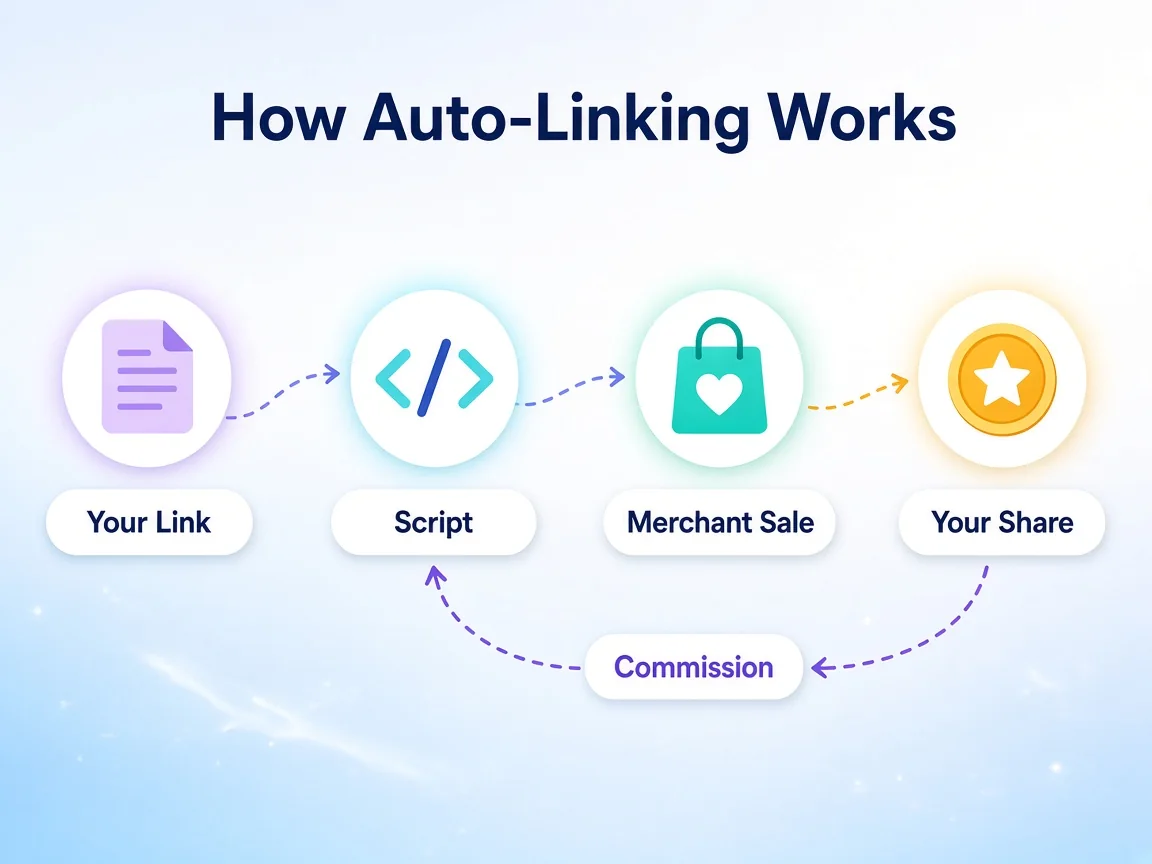
A sub-affiliate network sits between you and dozens of underlying affiliate networks. Instead of applying to each merchant program separately, you join one platform, add its JavaScript snippet (or a WordPress plugin), and keep writing normal links. When a reader clicks a link to a participating merchant, the script swaps in the network's tracked link, the sale is attributed through the merchant's own program, and the sub-affiliate takes a cut before passing the rest to you.
One script turns every eligible outbound link into a tracked link; the network keeps a share and pays out the rest.
That convenience is the whole product. You trade a slice of every commission for coverage you would never assemble alone, plus one dashboard and one payment instead of forty. If you want the mechanics behind the redirect, our guides to how affiliate tracking works and deep linking cover them in detail.
CPA on eligible sales, plus CPC on participating merchants
Publisher share
Skimlinks keeps a service fee of roughly 25% of earnings
Varies by merchant and model; check your dashboard
Payout threshold
About $65
$25 (PayPal or bank); $50 for international wire
Payment schedule
Monthly
Monthly
Payment methods
PayPal, bank transfer
PayPal, bank transfer, international wire
API
Yes
Yes
Two things jump out. Sovrn's lower threshold matters a lot to small sites: at $25 you see your first payment far sooner than at $65. And Sovrn's click-based earnings on some merchants mean you can earn on traffic that never buys, which Skimlinks' commission-share model does not offer.
Sovrn lists more merchants, but raw count is the wrong metric. What matters is whether the merchants your readers actually click are in the program, at what rate, and in which countries.
A fashion blog that links mostly to a handful of department stores, or a tech site that sends most clicks to three electronics retailers, should test with its own outbound-link list rather than trusting either headline number. Both platforms let you check merchant availability after sign-up, so pull your top 50 outbound domains from analytics and look each one up before you commit.
Coverage also differs by geography. If a big share of your audience is outside the US, look at how each network handles regional storefronts of the same retailer; a link to a UK domain may be monetized by one network and passed through untouched by the other.
How each one pays you
Skimlinks is commission-led. You earn when a referred click turns into a confirmed sale, and Skimlinks retains a service fee, widely reported at around 25% of earnings, for doing the network wrangling. Payouts go out monthly once you cross roughly $65.
Sovrn //Commerce blends two models. On many merchants you earn a CPA when a sale is confirmed; on participating merchants you can also earn CPC for qualifying clicks. That hybrid tends to suit sites with high click volume and lower purchase intent, such as news or deals roundups. Payouts are monthly from $25.
Neither network pays the moment a sale happens. Merchants confirm or reverse sales first (returns, cancellations, fraud checks), and the sub-affiliate can only pay once the underlying network has paid it. Expect a lag between the click and the cash; our explainer on what an affiliate cookie is covers why the window and confirmation rules shape real earnings.
Reporting and control
Both offer dashboards with clicks, sales, and earnings by merchant and page, and both expose an API for teams that want the data in their own reporting. Day-to-day, the practical questions are:
Can you break earnings down by page or article, so you know which content pays?
Can you pass your own tracking values to separate placements or newsletters? (See how to use sub-IDs.)
Can you exclude domains you already monetize directly, so the script doesn't overwrite a better link?
That last one is the most important setting on either platform. If you have a direct deal with a merchant at a higher rate, make sure the sub-affiliate leaves those links alone.
Which one fits your site?
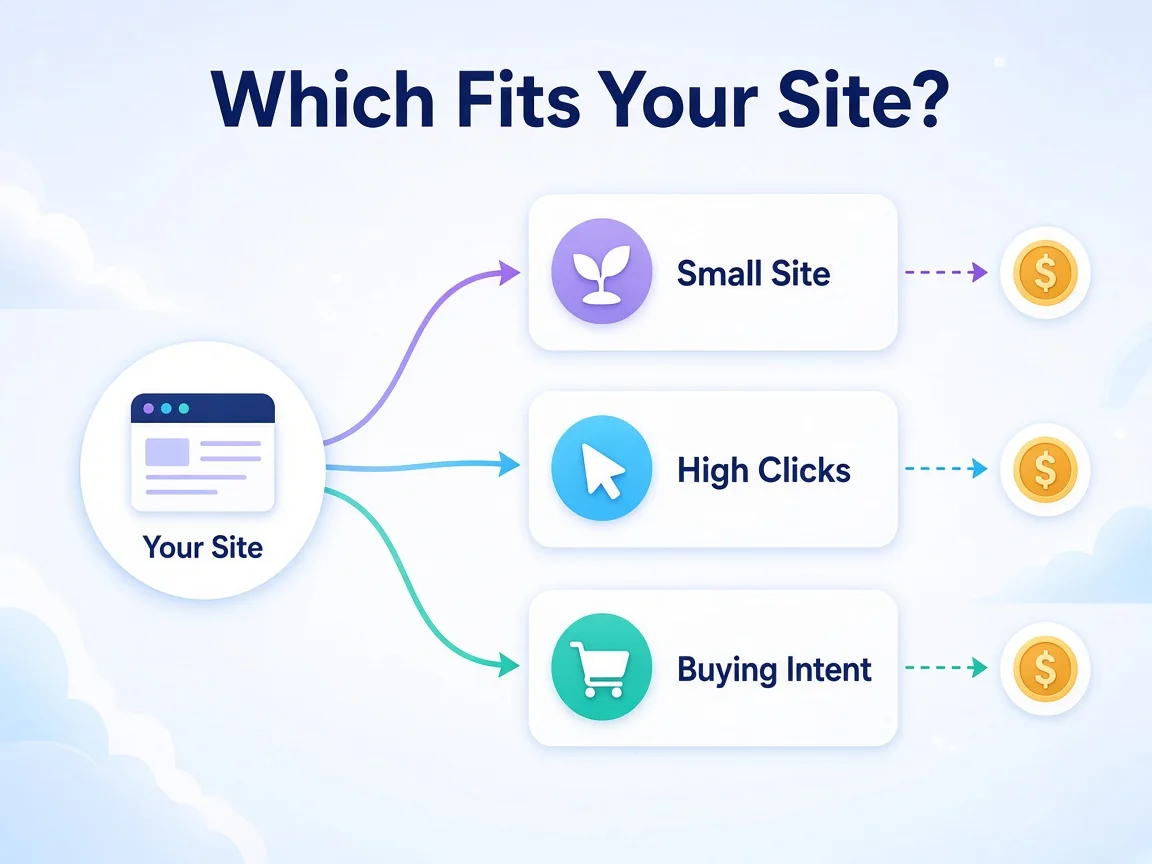
Start from your traffic and payout needs, not from the merchant count.
If your site…
Lean toward
Why
Is small and needs to reach a first payout quickly
Sovrn //Commerce
$25 threshold vs about $65
Gets lots of clicks but modest purchase intent
Sovrn //Commerce
CPC earnings on participating merchants
Is a commerce-led editorial site with buying-intent content
Skimlinks
Commission-led model built for product recommendations
Links heavily to a few big retailers
Whichever covers them at the better rate
Test your top domains in both
Already has direct deals with key merchants
Either, with exclusions set
Protect your higher direct rates
There is no rule that you must pick only one forever. Plenty of publishers start with one, measure earnings per thousand outbound clicks for a few months, then test the other on a section of the site. Just don't run both scripts on the same pages at the same time; they will fight over the same links and muddy your data.
Common mistakes
Letting the script overwrite direct links. A sub-affiliate share is almost always lower than a direct program rate. Exclude merchants you already work with.
Judging by merchant count. Check your own top outbound domains instead.
Ignoring the threshold. A small site can wait months to reach $65; that is a real cost.
Forgetting disclosure. Auto-affiliated links are still affiliate links. Keep a clear disclosure on every page that uses them. Our WordPress disclosure guide shows how.
Never graduating. Once a merchant drives meaningful revenue through the network, apply to its program directly and negotiate a better rate.
How to set up either network
01Export your top outbound domains from analytics for the last 90 days.
02Sign up and get approved; both review the site before activating.
03Check those domains against each network's merchant list.
04Install the script or plugin on a test section first, not sitewide.
05Add exclusions for any merchant you monetize directly.
06Run for at least one full payout cycle and compare earnings per click.
07Roll out sitewide with the winner, and revisit direct deals for your biggest merchants every quarter.
Affground's verdict
For most small and mid-sized blogs, Sovrn //Commerce is the easier starting point thanks to its lower payout threshold and click-based earnings. Commerce-focused publishers with strong buying intent should test Skimlinks on the same traffic and let earnings per click decide. Whichever you choose, treat a sub-affiliate network as the safety net under your direct programs, not a replacement for them. For the wider picture, see our list of Amazon Associates alternatives.
Frequently asked questions
What is the difference between Skimlinks and Sovrn //Commerce?
Both automatically convert outbound product links into affiliate links. Skimlinks is commission-led and lists 48,500+ merchants, while Sovrn //Commerce lists 60,000+ merchants and can pay CPC on participating merchants as well as CPA on sales. Sovrn's payout threshold is lower at $25 versus about $65 for Skimlinks.
How much does Skimlinks keep from my commissions?
Skimlinks retains a service fee widely reported at around 25% of earnings, and passes the rest to the publisher. Check your dashboard for the exact split on your account.
Can I use Skimlinks and Sovrn //Commerce at the same time?
You can test both, but not on the same pages at once. Two scripts will compete for the same links and make your data hard to read. Run one per section, compare earnings per click, then pick a winner.
Is VigLink the same as Sovrn //Commerce?
Yes. VigLink launched in 2009 and was acquired by Sovrn in 2018, becoming Sovrn //Commerce.
Do sub-affiliate networks pay less than direct affiliate programs?
Usually, because the network keeps a share of each commission. That's why you should exclude merchants you already monetize directly and apply to a merchant's own program once it drives meaningful revenue.
Do I still need an affiliate disclosure with auto-affiliated links?
Yes. Links rewritten by Skimlinks or Sovrn are affiliate links, so every page that uses them needs a clear disclosure.
Which is better for a small blog?
Sovrn //Commerce is often the easier start for small sites because its $25 threshold means a first payout arrives sooner, and click-based earnings help pages with lower purchase intent. Test with your own traffic before committing.