How to Join PartnerStack and Promote SaaS Programs
How the PartnerStack marketplace works for partners: applying to programs, the monthly payout cycle, picking B2B SaaS offers that fit your audience, and the setup steps that avoid stuck commissions.
Oct 22, 2026 · 7 min read
PartnerStack is where a large share of B2B SaaS companies run their partner programs. Instead of applying to monday.com, Pipedrive, ActiveCampaign and Brevo one by one on four different dashboards, you get one account, one marketplace, one payout wallet and a single tax form. That convenience is real, but it hides the part most new partners get wrong: every program inside PartnerStack still sets its own commission, cookie, approval rules and review window.
This guide is for bloggers, YouTubers, newsletter writers and consultants whose audience buys business software. It walks through how the marketplace works, how the monthly payout cycle actually runs, how to pick offers that fit your traffic, and the setup steps that keep commissions from getting stuck in "pending".
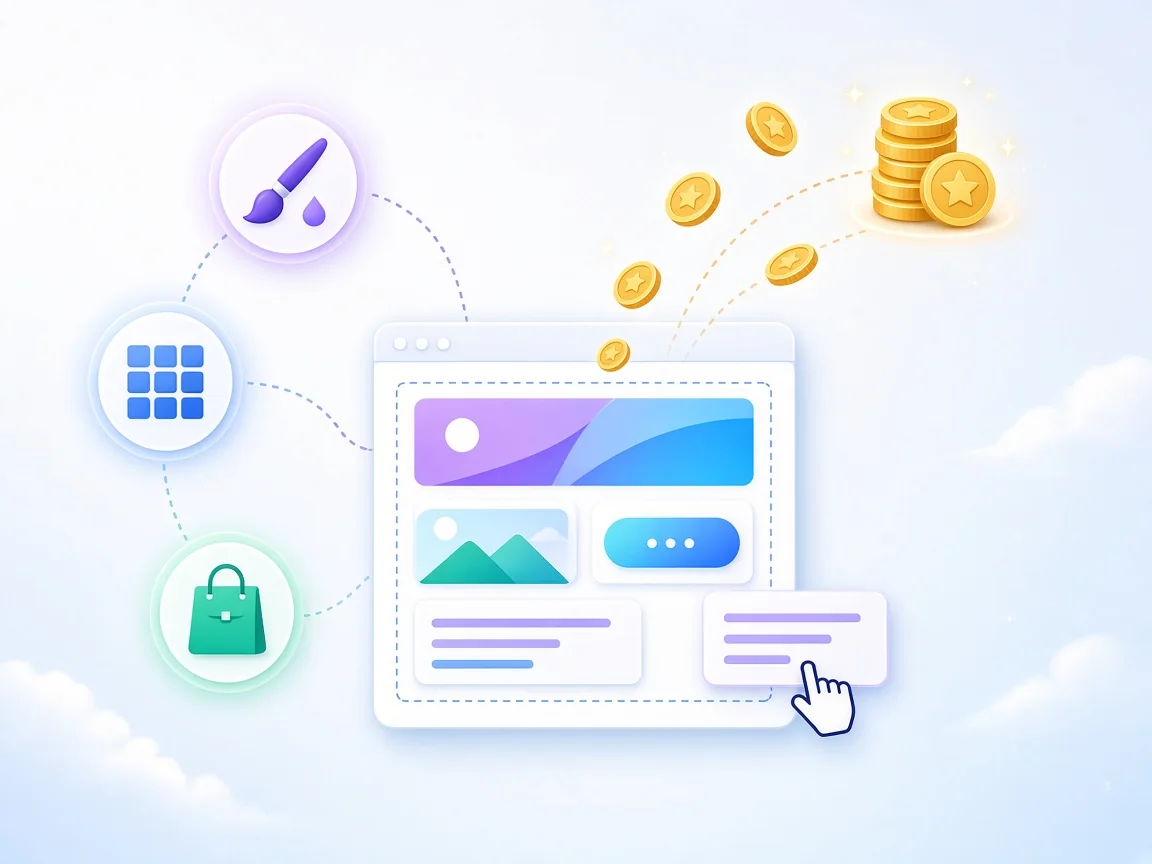
One account, many SaaS programs: the marketplace is the shortcut, the program terms still decide what you earn
What PartnerStack is (and what it isn't)
PartnerStack is a partnerships platform that SaaS vendors pay to run their affiliate, referral and reseller programs. For a partner, it behaves like an affiliate network: you sign up once, browse a marketplace of programs, apply to the ones you want, and collect commissions from all of them in one place.
What it is not is a generic network with thousands of retail merchants. The catalogue is concentrated in B2B and prosumer software: CRMs, project management, email marketing, website builders, sales tools and AI products. If your readers run teams, sell services or manage marketing budgets, that concentration is an advantage. If they mostly buy consumer goods, you'll find little to promote.
Two things stay with each program rather than with PartnerStack:
Commission terms. One program pays a flat bounty per paid signup, another pays a percentage of first-year revenue, a third pays recurring commission with tiers.
Approval and review. Each company decides whether to accept you and whether each commission is valid.
How the marketplace works
The partner journey has four stages, and each is controlled by a different party.
Stage
Who controls it
What you do
Account creation
PartnerStack
Create a partner profile, add your sites and channels
Program application
Each SaaS company
Apply in the marketplace; some programs auto-approve, others review manually
Tracking
Program's link + PartnerStack
Share your unique referral link; a cookie records the referral
Commission approval
Each SaaS company
Nothing, other than avoiding self-referrals and policy breaches
Withdrawal
PartnerStack + your payout provider
Connect PayPal, Stripe or direct deposit, file tax info, withdraw
Your profile matters more than people assume. Program managers reviewing applications see the sites, channels and audience description you entered. A vague profile ("I do marketing") gets declined far more often than one that names the site, the topic and the kind of buyer. Our guide on what affiliate managers look for in publishers covers what reviewers check.
How PartnerStack payouts actually work
This is the part to understand before you promote anything. PartnerStack's own help centre describes a monthly cycle, and it explains why a commission earned on the 2nd of the month may not be withdrawable for roughly six weeks.
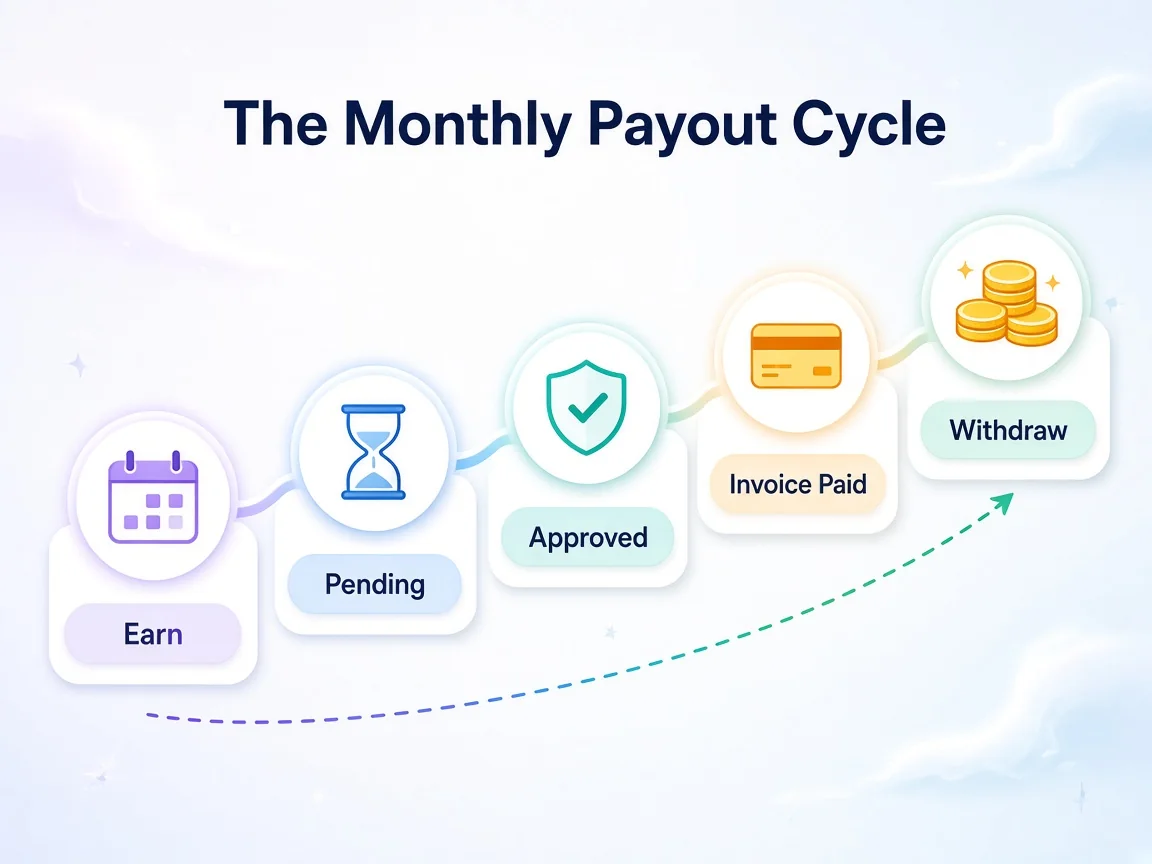
Commissions move in a monthly batch: earned this month, reviewed early next month, withdrawable around the 13th
01Earn (1st to end of month). Commissions accrue and show as Pending approval with an estimated payment date.
02Review (start of next month). At month end, PartnerStack sends each company its list of pending commissions. Companies get about a week to approve or decline them.
03Invoice paid. The company's commission invoice is charged, standardly around the 7th. Card payments clear the same day; ACH takes several business days.
04Available (around the 13th). Approved, paid commissions become withdrawable, some as early as the 8th depending on how the company pays.
05Withdraw. You cash out to your connected provider.
The practical numbers, according to PartnerStack's partner documentation:
Item
What PartnerStack states
Minimum withdrawal
$5 USD after fees
Payout methods
PayPal, Stripe, direct deposit
PayPal delivery
6–10 business days
Stripe / direct deposit delivery
2–5 business days
Tax information
Required before any withdrawal
Statuses you'll see
Pending approval, On hold, Declined, Approved & pending payment, Available
Some programs layer their own rules on top, such as longer hold periods to cover refund windows. That's why a program's page in the marketplace deserves a careful read before you commit content to it. For the broader mechanics of holds, thresholds and clawbacks across networks, see how affiliate payouts work.
How to pick B2B SaaS offers that pay
The marketplace sorts nothing by fit for your audience, so the choice is yours. The headline rate is the least useful number on the page. What decides earnings is how the commission is structured relative to how your readers buy.
Commission model
Typical shape in SaaS
Best for
Flat bounty per paid signup
Fixed amount once the referral pays
Comparison and "best X" content with buyers ready to choose
Lead or free-signup bounty
Small fixed fee per free account
High-volume tutorial traffic where many readers try before buying
% of first-year revenue
Share of everything the customer pays for 12 months
Audiences that buy team plans, where seat counts grow
Tiered recurring
Rate rises with your volume
Partners who expect to send steady monthly referrals
Three filters do most of the work:
Match the buyer, not the niche. A CRM aimed at small sales teams converts from content about closing deals, not from generic productivity posts.
Check the cookie against your sales cycle. B2B buyers often trial, compare and come back weeks later. A 90-day cookie covers that; a 30-day cookie may not. Our explainer on attribution windows goes deeper.
Prefer free trials or free plans. Products readers can try without talking to sales convert far better from content traffic.
These programs all run through PartnerStack and are good first applications for software-focused publishers. The cards pull live terms from the Affground directory.
01Create your partner account and fill in every profile field: site URLs, social channels, audience size and topic, and how you plan to promote.
02Add tax information and a payout method early. You can't withdraw without both, and fixing them later delays your first payout.
03Shortlist three to five programs that fit one content cluster, rather than applying to everything in the marketplace.
04Apply with a specific pitch. Name the article or video you plan to publish and the reader it targets.
05Read each program's terms for cookie length, commission trigger, prohibited traffic (brand bidding is commonly banned) and hold period.
06Build content before links. A comparison, tutorial or "best tools for X" piece earns more than a link dropped in a sidebar.
07Use sub-IDs or separate links per placement so you know which page converts. See how to use sub-IDs.
08Watch your Commissions tab after month end. If something stays On hold past its estimated date, message the program from the Messages tab.
Common mistakes
Treating PartnerStack approval as program approval. Your account being live doesn't mean any program has accepted you.
Ignoring the commission trigger. "Per paid signup" and "per workspace created" pay very differently for the same traffic.
Skipping tax info until payday. It blocks withdrawal entirely.
Brand bidding without permission. Many SaaS programs prohibit bidding on their brand terms in paid search, and violating it gets commissions declined.
Expecting money in the same month. The monthly batch means your first withdrawal usually lands the month after you earn.
Spreading too thin. Ten programs with one mention each underperform three programs covered in depth.
Affground's verdict
PartnerStack is the most efficient way into B2B SaaS affiliate income: one profile, one wallet and a catalogue built for software buyers. Treat it as infrastructure, not strategy. Pick a handful of programs whose buyers match your readers, check the cookie and commission trigger against how those readers buy, and plan your cash flow around the monthly payout cycle.
Frequently asked questions
Is PartnerStack free for partners?
Yes. SaaS companies pay PartnerStack to run their programs; partners create an account and join programs without a fee. Withdrawal fees from your payout provider can apply.
When does PartnerStack pay out?
Commissions earned during a month are sent to each company for review at month end. Once approved and the company's invoice is paid, they typically become available to withdraw around the 13th of the following month, sometimes from the 8th.
What is the minimum withdrawal on PartnerStack?
PartnerStack states you need at least $5 USD in available commissions after fees to withdraw.
Which payout methods does PartnerStack support?
PayPal, Stripe and direct deposit. PartnerStack quotes 6–10 business days for PayPal and 2–5 business days for Stripe and direct deposit.
Does joining PartnerStack approve me for every program?
No. Your PartnerStack account is just the starting point. Each company reviews applications to its own program and can approve or decline you.
Why is my PartnerStack commission still pending?
Commissions stay pending until the company reviews them, which usually happens after month end. Some programs add hold periods or place commissions on hold for validation; contact the program through the Messages tab if one passes its estimated date.
What kinds of programs are on PartnerStack?
Mostly B2B and prosumer software: CRMs, project management, email marketing, website builders, sales tools and AI products.
Oct 21, 2026 · 7 min read
How Affiliate Payouts Work: Thresholds, Net Terms & Methods
Lock periods, payout thresholds, net terms, reversals and tax forms: how affiliate commissions actually turn into cash, with real terms from CJ, impact.com, ShareASale and ClickBank.