A practical guide to affiliate marketing on LinkedIn for B2B and SaaS: build authority, place tracked links where they survive, disclose clearly, and pick offers that fit long buying cycles.
Oct 4, 2026 · 8 min read
LinkedIn is where B2B buyers research vendors, compare tools, and ask peers what they actually use. That makes it a strong channel for affiliate marketing — if you treat it as authority content and tracked recommendations, not a spam-DM machine. Consumer social rewards impulse; LinkedIn rewards trust over weeks or months.
This guide is for consultants, operators, SaaS-native creators, and niche publishers who sell to professionals. We cover what affiliate marketing on LinkedIn actually is (it is not LinkedIn Ads), the content → trust → tracked-link loop, offer shapes that fit long sales cycles, where links survive the feed, disclosure, and a launch plan. New to the model? Start with what affiliate marketing is. Prefer consumer channels? See , , , and . For software-heavy catalogs, browse .
Affiliate marketing on LinkedIn means you recommend a product or service with a tracked link, a decision-maker eventually buys (or starts a trial), and you earn a commission. It is not running LinkedIn Ads on behalf of a brand, and it is not cold outreach that pastes affiliate URLs into strangers' inboxes.
The working unit is your personal brand (or a focused company page used for education): posts, Articles, newsletters, carousels, and thoughtful comments that prove you understand a buyer's problem. The commission comes later — often after demos, procurement, and multi-stakeholder review — so cookie windows, partner dashboards, and CRM reconciliation matter more here than on impulse-retail platforms.
How it works
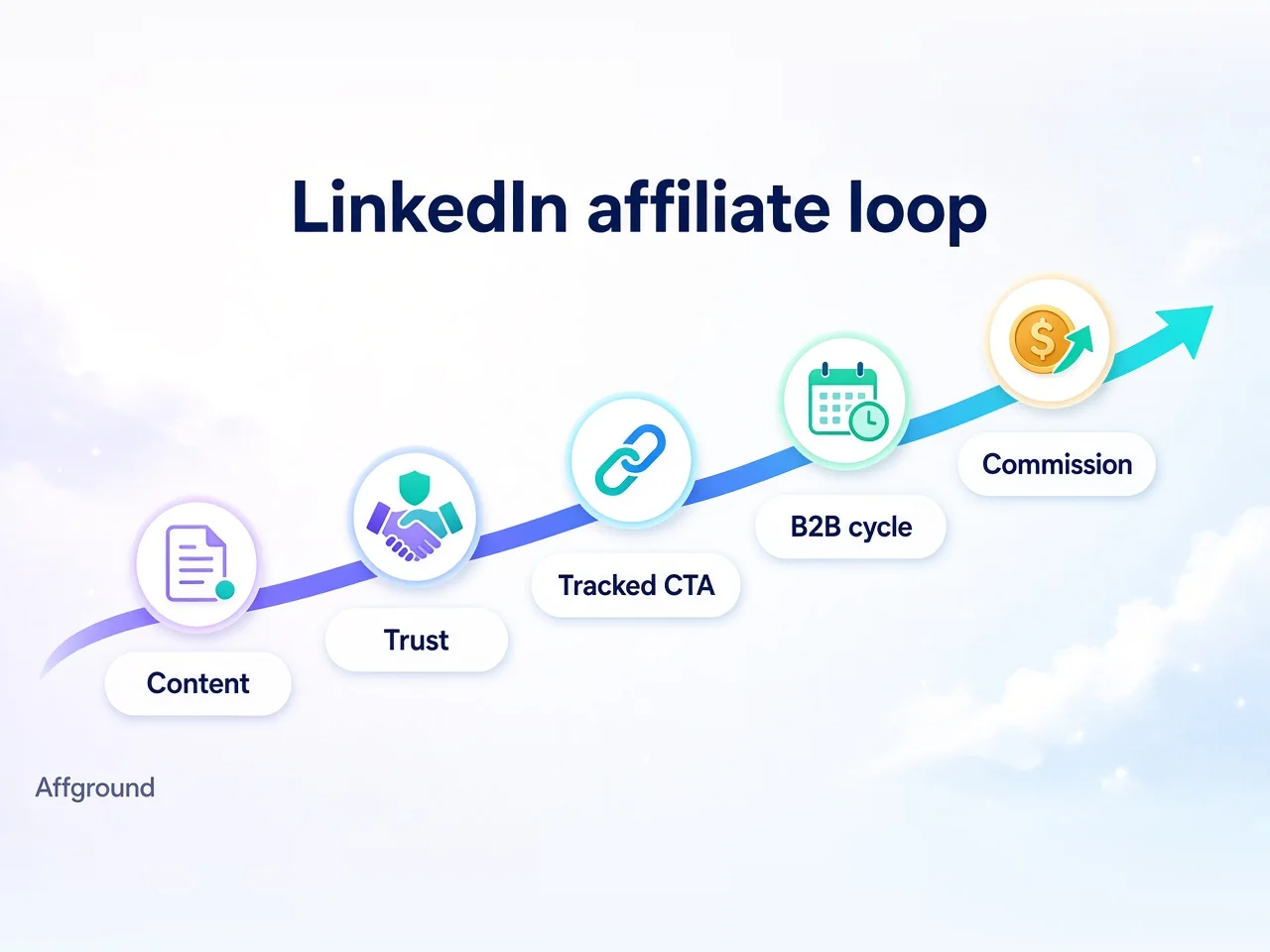
The loop is longer than short-form social, but the mechanism is the same:
01Publish useful content that surfaces a real workflow pain (CRM hygiene, SEO research, project ops, docs, email automation).
02Earn trust — saves, comments, profile visits, newsletter subs — so your recommendation is credible.
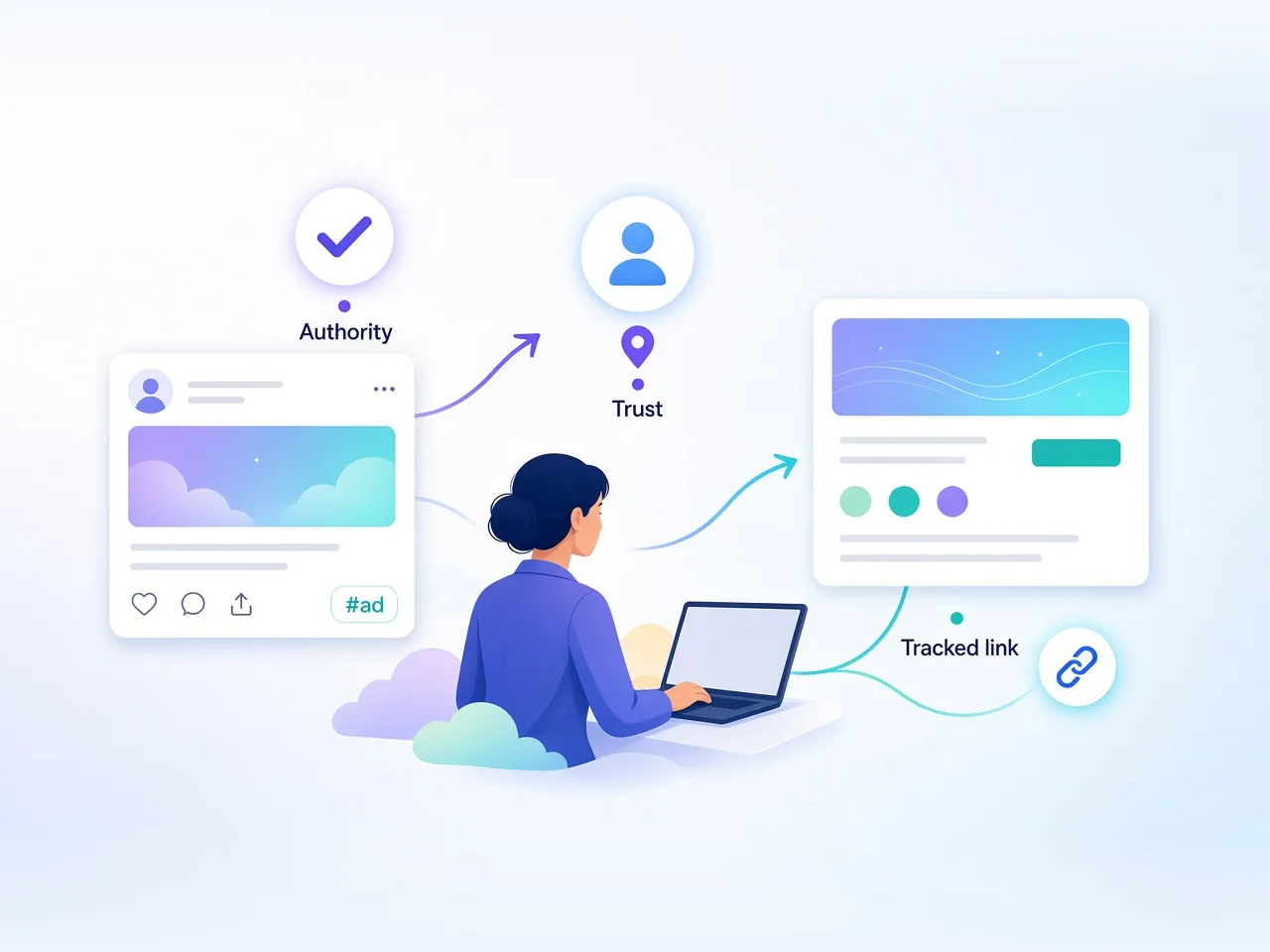
03Send interested readers to a tracked destination: Featured section, About link, newsletter CTA, Article footer, or (best) your own landing page that holds context and disclosure.
04The prospect evaluates over days or months; if they convert inside the program's attribution window, you get paid.
LinkedIn's feed often suppresses early raw outbound links, so the soft CTA ("I broke this down on my site — link in Featured") plus a polished owned page usually beats dropping a naked affiliate URL in the first line. You still disclose the commercial relationship early and clearly.
The numbers — offer shapes that fit LinkedIn
Exact payouts change by advertiser, geo, and plan. What stays stable is structure. Use the table as a map of shapes, not a promise of dollars:
Offer type
Typical payout shape
Attribution reality on LinkedIn
Fit
SaaS / tools (recurring)
Percentage of subscription for a fixed period, or lifetime on some programs
Weeks–months of evaluation; longer cookie / partner windows win
Excellent when your audience buys software
SaaS / tools (one-time)
Flat bounty or first-invoice cut
Still a long cycle; last-click models miss assisted deals
Good if you drive high-intent demos
Courses / education
One-time % of purchase
Shorter than enterprise SaaS, still not impulse
Strong for operator / creator education niches
Agencies / services
CPA or revenue share on signed retainers
Often offline close; affiliate cookie alone may under-count
Possible if you reconcile with the partner CRM
Consumer retail
Retail % with short cookies
Audience mismatch on a professional feed
Usually weak — wrong context
On LinkedIn, a modest recurring SaaS cut with a long window often beats a flashy one-time CPA that expires before procurement finishes. If you only optimize for last-click vanity, you will undervalue content that starts the deal and overvalue the person who dumped a link at the end.
Formats that work
Value-first, then a soft CTA. Formats that travel:
Text posts with a sharp claim — one problem, one framework, one takeaway; CTA at the end.
Carousels / document posts — step frameworks, checklists, "how we run X" playbooks; high save rates.
LinkedIn Articles — longer how-tos where you can place context, disclosure, and a tracked link in the body or footer.
Newsletters — owned distribution; ideal for recurring SaaS recommendations to people who already opted in.
Thoughtful comments — add substance under a relevant post, then invite people to a resource (not a raw pitch).
What fails: spray-and-pray "DM me for the link," engagement-bait with no expertise, and consumer unbox energy transplanted onto a B2B feed.
Where to put links
Think hand-off, not feed spam:
Featured — pin a landing page or resource; this is the default organic surface.
About / website field — one primary URL; keep it clean.
Newsletter and Article CTAs — natural places for tracked links with room for disclosure.
Your own landing page — best practice for multi-offer niches and for programs that dislike raw social redirects; cleaner if you later track links properly on a site you control.
Comments — reinforce the CTA ("full write-up + links in Featured"); avoid dumping five affiliate URLs.
If a program restricts certain social placements, route LinkedIn traffic to your page first, then to the tracked offer. That pattern mirrors Instagram/TikTok bio strategies and keeps you inside more network terms.
Choosing offers
Buyer-fit beats headline rate. Ask:
01Does my audience already evaluate this category?
02Can I explain the product from lived experience — not a screenshot from the affiliate dashboard?
03Is the payout recurring or long-window enough for a B2B cycle?
04Is the program on a partner platform that handles B2B tracking well (many SaaS brands run through stacks like PartnerStack or Impact-style networks — see the networks directory)?
Prefer tools you would recommend without a commission. LinkedIn audiences punish hype fast; one bad endorsement can cost more trust than a quarter of commissions recovers.
Where to start — a practical shortlist
Pick one professional niche (RevOps, SEO, project ops, knowledge work, email automation), two or three products you can defend in public, and one link surface you will use every time (Featured → landing page is the default).
A practical shortlist of SaaS-friendly programs and a partner network often used for B2B software:
HubSpot, Semrush, monday.com, Notion, and ActiveCampaign map cleanly to professional workflows; PartnerStack is a common home for SaaS partner programs when you want breadth beyond a single brand. Match the offer to the problems you already teach — not the highest listed percentage. For a wider SaaS catalog, see best SaaS affiliate programs.
Common mistakes
Spam DMs and scraped outreach — against professional norms, LinkedIn policies, and most program terms; it also trains your network to ignore you.
No disclosure — bury "#ad" or skip it; FTC-style rules want clear and conspicuous material-connection language early.
Consumer offers on a B2B feed — gadgets and impulse retail rarely earn trust here.
Ignoring long attribution — judging LinkedIn on last-click 7-day cookies when deals close in 60–90 days.
Vanity metrics — celebrating impressions while Featured clicks, trial starts, and partner-approved sales stay flat.
Raw early links in every post — fighting the feed instead of building a reliable hand-off.
Collecting 40 random programs — one niche, a few offers, consistent proof beats a bloated link farm.
Step-by-step to launch
01Choose a lane — one buyer persona and one problem category you can write about weekly.
02Join 2–4 fitting programs from the shortlist above (or peer SaaS offers on PartnerStack-style networks).
03Build the hand-off — a simple landing page with disclosure, offer context, and tracked links; pin it in Featured.
04Write disclosure once, reuse often — e.g. "Affiliate links — I may earn a commission" near the CTA and on the page.
05Publish a small batch — 8–12 posts/carousels on the same theme; change the hook, not the niche.
06Add one deeper asset — an Article or newsletter issue that finishes the education a feed post cannot.
07Measure the right funnel — profile visits → Featured/landing clicks → trials/demos → approved commissions. Impressions are optional drama.
08Reconcile long cycles — check partner dashboards on a schedule; ask partners how assisted or CRM-attributed deals are handled when cookies expire.
09Stay compliant — no mass spam, no scraping, refresh links when terms change, disclose every commercial recommendation.
Affground's verdict
LinkedIn affiliate marketing is authority content with a tracked door, not inbox spam. Win trust in public, send buyers to a page you control, pick recurring SaaS and long-window tools that match how professionals actually buy, and disclose without apology. Do that in one niche and follower count becomes a lagging indicator — pipeline and partner-approved revenue will tell you first.
Frequently asked questions
How do you do affiliate marketing on LinkedIn?
Build authority with useful B2B content, disclose commercial relationships clearly, and send interested readers to a tracked destination — usually Featured or a landing page — rather than spam DMs. When a prospect converts inside the program's attribution window, you earn a commission. Recurring SaaS and long-window tools fit LinkedIn's longer buying cycles better than impulse retail offers.
Is affiliate marketing allowed on LinkedIn?
Yes, when you follow LinkedIn's professional norms and policies plus FTC-style disclosure rules. Recommend products honestly in public content, put tracked links in allowed surfaces (Featured, About, Articles, newsletters, owned pages), and avoid scraping, mass spam DMs, and deceptive practices. Always check each affiliate program's terms for social placement restrictions.
Where should you put affiliate links on LinkedIn?
Prefer Featured, the website/About field, newsletter and Article CTAs, and especially your own landing page that holds context and disclosure. Soft CTAs in posts ("link in Featured") often work better than raw early outbound URLs, which the feed may suppress. Comments can reinforce the hand-off; they should not become a dump of affiliate URLs.
What affiliate offers work best on LinkedIn?
B2B SaaS and professional tools with recurring commissions or longer attribution windows — CRMs, SEO suites, project management, docs, and email platforms your audience already evaluates. Consumer retail and short-cookie impulse products are usually a poor fit for a professional feed and multi-week sales cycles.
Do you have to disclose affiliate links on LinkedIn?
Yes. Material connections must be clear and conspicuous under FTC-style guidance. Put language like "affiliate link" or "#ad" near the recommendation and on the destination page — not buried after the decision. Disclosure protects trust; hiding it risks both compliance and reputation.
Why do cookie windows matter more for LinkedIn affiliates?
B2B purchases often take weeks or months of demos, stakeholder review, and procurement. A short last-click cookie can expire before the deal closes, under-counting content that started the evaluation. Prefer longer partner windows and ask how assisted or CRM-reconciled conversions are handled.
Can you promote affiliate offers through LinkedIn DMs?
Mass or scraped outreach is a bad idea: it violates professional norms, can breach LinkedIn policies, and often violates program terms. If someone asks you privately after public value, a disclosed recommendation may be fine — but your growth engine should be public authority content, not inbox spam.
How is LinkedIn different from TikTok or Instagram for affiliates?
LinkedIn skews toward decision-makers and longer B2B cycles; TikTok and Instagram favor faster visual discovery and shorter attention. On LinkedIn, frameworks, Articles, newsletters, and soft CTAs to owned pages outperform UGC-style impulse demos. Offer selection should follow buyer context, not the highest headline retail percentage.