The tools that run your blog are the easiest to sell honestly. Compare hosting, page builder, SEO and email affiliate programs by commission, cookie and recurring pay.
Oct 10, 2026 · 7 min read
The easiest software to sell on a blog is the software that runs the blog. Hosting, page builders, SEO tools and email platforms are things your readers need the moment they decide to start a site of their own, and you can review them from daily first-hand use instead of a spec sheet. That combination of real experience and high-intent readers is why blogging-tool programs pay well: per-sale bounties of $50 to $200+ on hosting, and 30% recurring on email and SEO subscriptions.
This guide is for bloggers in make-money-online, WordPress, marketing and creator niches. It is narrower than our SaaS affiliate roundup: instead of business software in general, it covers the four layers of a working blog stack, compares real program terms from Affground's listing data, and ends with a shortlist and a rule for choosing.
The tools you already pay for are the ones you can review most honestly.
Why your own tool stack is the best affiliate niche
Most affiliate content asks readers to trust your judgement about something you have barely touched. Blogging tools flip that. You set up the hosting, fought with the page builder, ran the keyword research and sent the newsletter, so your screenshots, timings and complaints are genuine. That is exactly what a product review needs to convert (see how to write product reviews that convert).
The audience is also unusually well matched. Someone reading "how I started my blog" or "best hosting for a new WordPress site" is close to a purchase decision, and once they buy hosting they need a theme, an SEO tool and an email platform next. One reader can trigger several commissions over a few months.
The four layers of a blogger's stack
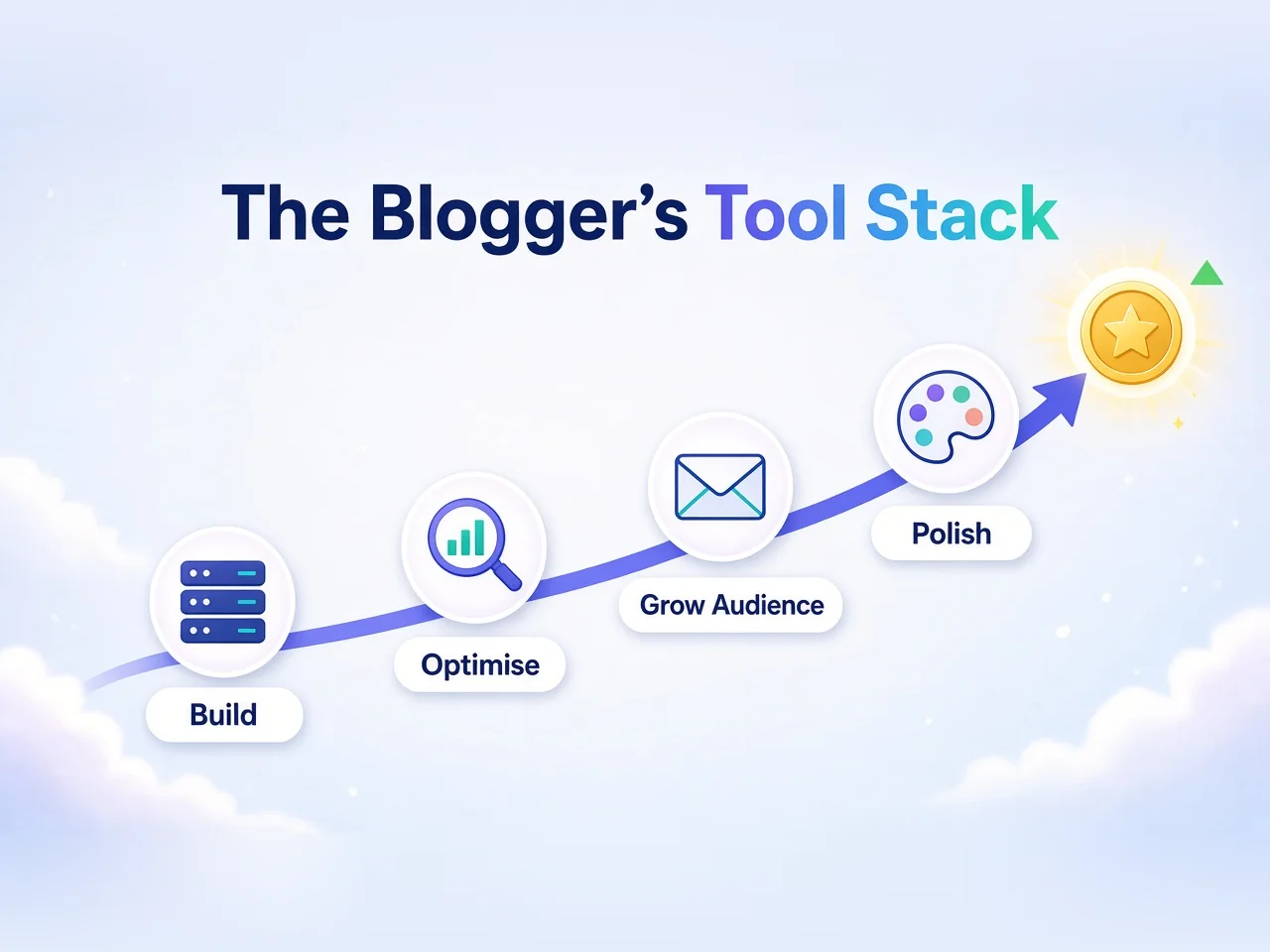
Every blog that earns money runs on roughly the same four layers, and each pays in a different way:
01Build: web hosting and site builders. Bought once at the start, usually paid as a one-time bounty or a percentage of the first purchase.
02Optimise: SEO and content tools. Monthly subscriptions, usually paid as recurring commission or a large first-payment CPA.
03Own the audience: email and newsletter platforms. Subscriptions that grow with the list, typically recurring for the customer's lifetime.
04Polish: writing and design tools such as Grammarly and Canva. Mass-market products with small flat bounties that work on volume.
Each layer of the stack pays differently: bounties up front, recurring income further up.
The pattern matters for planning. Build-layer programs pay the biggest single cheques but end at the sale. Optimise and audience programs pay less per month but keep paying while your referral stays subscribed. A healthy blogging-tools portfolio mixes both, so launch-month cash and a recurring base arrive together.
The numbers: program terms compared
These terms come from Affground's listing data for each program. Affiliate terms change often, so confirm the current rate on the program's page before you publish a review.
Program
Layer
Commission
Recurring?
Cookie
Minimum payout
Hostinger
Build
40%, up to 60% for high-volume affiliates
No
30 days
$100
SiteGround
Build
$50–$100+ per sale, tiered by monthly volume
No
60 days
None
WP Engine
Build
$200 minimum or 100% of first month, whichever is greater
No
180 days
$50
Elementor
Build
Up to 55% on first purchases
No
45 days
$200
Kit (ConvertKit)
Audience
30% of subscription
Yes
90 days
$50
MailerLite
Audience
30% of subscription
Yes, lifetime
45 days
$100
SE Ranking
Optimise
30% of subscription
Yes, lifetime
120 days
$50
Surfer SEO
Optimise
75–125% of first monthly payment, tiered
No (first payment)
Check terms
—
Grammarly
Polish
About $20 per Premium sale, plus about $0.20 per free sign-up
No
90 days
$50
Canva
Polish
About $36 per annual Pro sale, or 80% of the first two months
No
30 days
$10
A few things stand out. WP Engine's 180-day cookie and SE Ranking's 120-day cookie are long enough to credit readers who research for weeks before buying, which is common with paid tools (our guide to affiliate cookies explains why that window matters). SiteGround pays weekly with no minimum, which suits new blogs with low volume. Surfer front-loads earnings into the first payment rather than paying recurring, so it behaves more like a bounty than a subscription share.
Bounties vs recurring: which pays more for a blog?
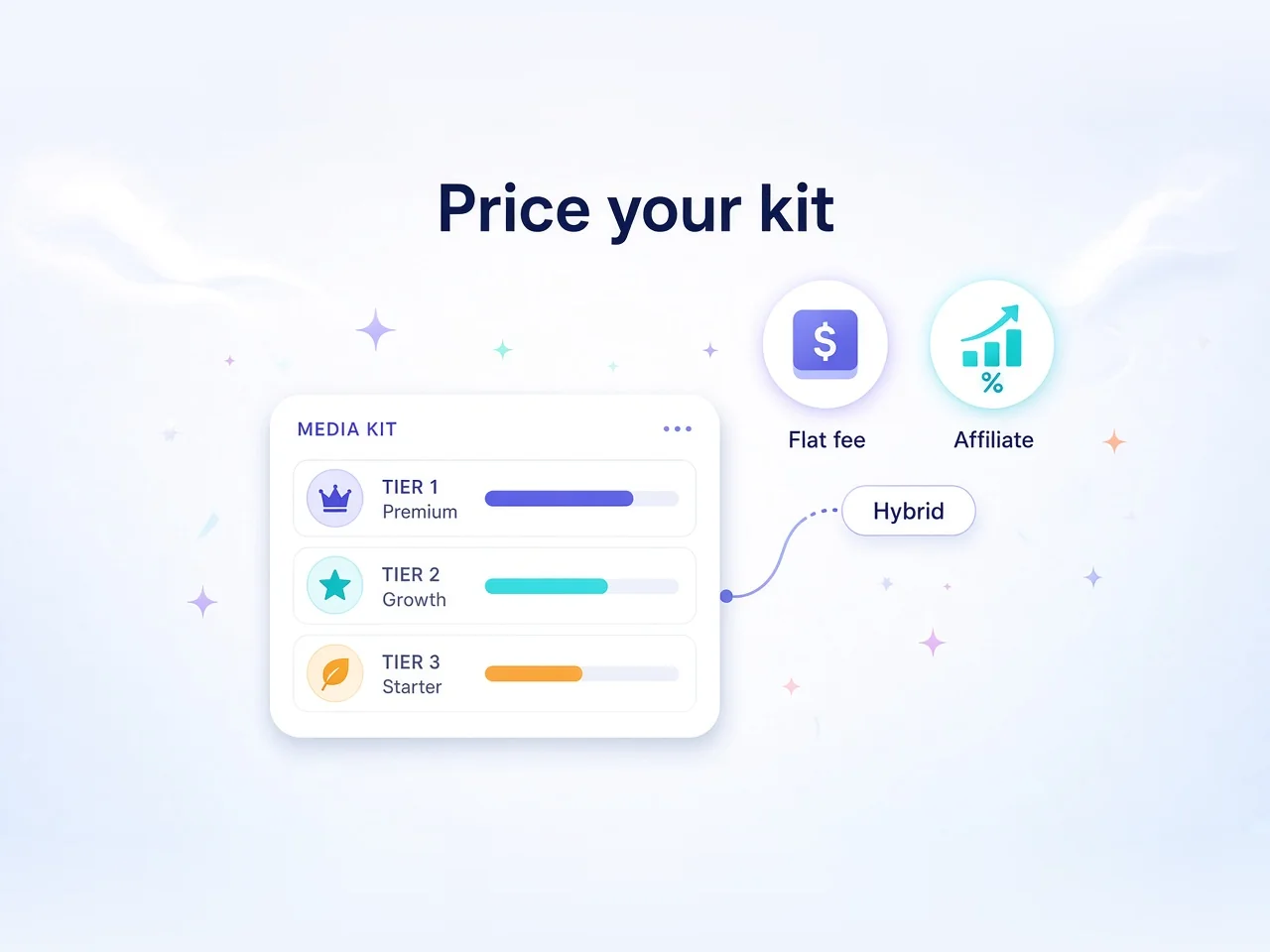
A flat hosting bounty is easy to understand: one sale, one payment. Recurring commission needs a little arithmetic. A reader who buys an email plan and stays for two years pays you 30% of 24 monthly invoices, which can outearn a one-time hosting bounty even though the monthly figure looks small. The catch is churn: recurring income is only as good as the product's retention, and a tool that people cancel after three months pays far less than its headline rate suggests.
The practical rule is to match the payment model to the reader's moment. Beginner content ("how to start a blog", "cheapest WordPress hosting") reaches people making a one-off setup purchase, so bounties fit. Growth content ("how I grew my newsletter", "my SEO workflow") reaches people who will keep paying monthly, so recurring programs fit. For a deeper look at the trade-off, see CPA vs revenue share vs hybrid.
How to choose the right programs
Before joining anything, run each candidate through four questions:
Do you actually use it? If not, use it for a month first. First-hand detail is the whole advantage of this niche.
Does it match your readers' stage? Beginners buy hosting and builders; established bloggers buy SEO and email upgrades.
Is the cookie long enough? Software buyers compare and trial. Under 30 days is a real disadvantage for considered purchases.
Can you reach the payout minimum? A $200 threshold with net-60 payment, as on Elementor, can hold a small site's earnings for months.
Hosting is the most competitive layer for search traffic, so newer blogs often do better ranking for long-tail tool tutorials and comparisons first, then adding hosting reviews once the site has authority. Our broader web hosting affiliate guide and email marketing affiliate guide go deeper on each of those layers.
Shortlist: software affiliate programs for bloggers
Promoting tools you've never used. Readers in this niche are technical enough to spot recycled feature lists.
Leading with the commission. Recommending the highest-paying host instead of the right one costs trust you will need for every later recommendation.
Ignoring renewal pricing. Many hosts have low first-term prices and higher renewals. Say so plainly; readers find out anyway.
Only chasing bounties. A stack of one-time payouts resets to zero every month. Add at least one recurring program.
Skipping disclosure. Tool reviews are exactly where disclosure is expected. Our guide to affiliate disclosures on WordPress covers setup.
Step-by-step: build your blogging-tools affiliate stack
01List every paid tool your blog runs on today, from hosting to email.
02Check whether each has an affiliate program, and note the commission type, cookie length and payout minimum.
03Pick one program per layer that you genuinely recommend, prioritising long cookies and at least one recurring offer.
04Write a "tools I use" resource page and link each tool to its in-depth review.
05Publish tutorials that show the tool solving a real problem on your own site, with your own screenshots.
06Add the relevant review link wherever a post mentions a tool, and track results with sub IDs to see which pages convert.
07Review terms every quarter and swap out programs whose rates or retention have slipped.
Affground's verdict
The strongest software affiliate strategy for a blog is the least glamorous one: promote the stack you already run, mix one-time hosting bounties with recurring email and SEO commissions, and let first-hand experience do the selling. Picking programs by headline rate alone is how blogs lose readers' trust. Picking them by fit is how you keep it.
Frequently asked questions
What are the best software affiliate programs for bloggers?
It depends on what your blog runs on and who reads it. For beginners starting sites, hosting programs such as Hostinger, SiteGround and WP Engine pay the largest single commissions. For established bloggers, recurring programs such as Kit, MailerLite and SE Ranking pay 30% of every subscription payment for as long as the referral stays.
Do hosting or SaaS affiliate programs pay more?
Hosting usually pays more per sale: WP Engine pays at least $200 per hosting sale and SiteGround pays $50 to $100+ depending on volume. Recurring SaaS programs pay less each month but can outearn a one-time bounty if the customer stays subscribed for a year or more.
Which blogging tools pay recurring affiliate commission?
Among the programs in this guide, Kit (ConvertKit), MailerLite and SE Ranking pay 30% recurring commission, with MailerLite and SE Ranking listed as lifetime recurring. Hosting, Elementor, Surfer SEO, Grammarly and Canva pay one-time commissions or first-payment bounties instead.
Can a new blog join software affiliate programs?
Yes. Many blogging-tool programs accept small sites: Mangools lists no approval process, and SE Ranking lets even free-account users join. Check the payout minimum before joining, because a high threshold like Elementor's $200 can hold a small site's earnings for months.
Why does cookie length matter for software affiliate programs?
Software buyers often compare options and run free trials before paying, so a purchase can come weeks after the first click. Longer cookies, such as WP Engine's 180 days or SE Ranking's 120 days, are more likely to credit you for those delayed sales.
Should I only promote tools I actually use?
It is the strongest approach in this niche. Readers interested in blogging tools are technical enough to spot recycled feature lists, and first-hand screenshots, setup details and honest drawbacks are what make a tool review convert.
Do I need to disclose affiliate links in tool reviews?
Yes. Any review or resource page with affiliate links should include a clear disclosure near the links. On WordPress you can add one site-wide or per post; our guide to affiliate disclosures on WordPress walks through the setup.