YouTube is the world's second-largest search engine and a conversion machine for affiliates — video demonstrates products in a way text can't, and it's free to start. This guide covers how YouTube affiliate marketing works, where to place your links, disclosure, the video types that convert, the best niches and programs, and how to grow a channel that earns.
Jul 25, 2026 10 min read
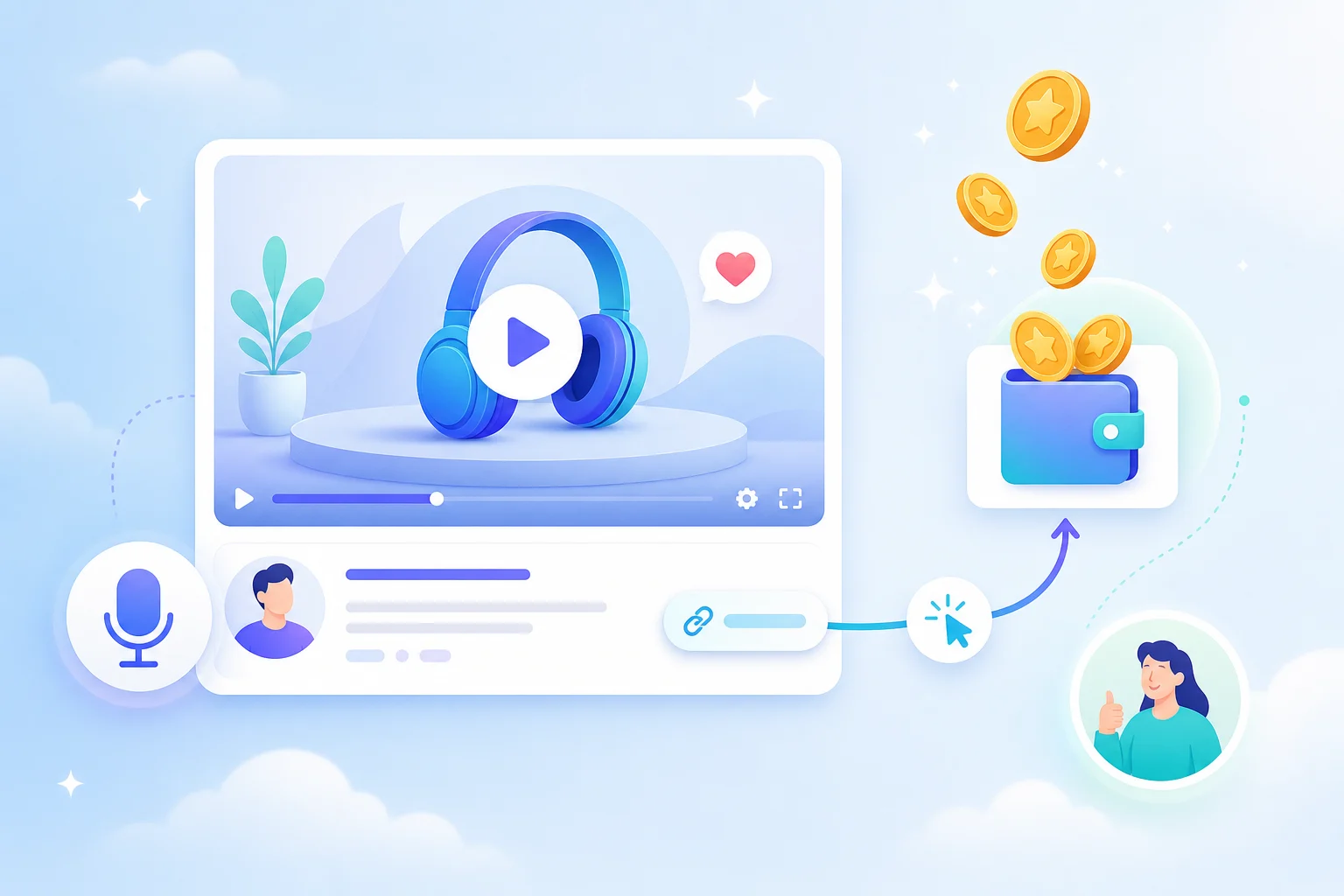
Here's why so many affiliate marketers quietly build their businesses on YouTube: it's the world's second-largest search engine, its videos rank for years, and watching someone actually a product converts better than any block of text ever could. When a viewer sees the tool in action, hears your honest verdict, and finds your link right there in the description, the distance between "interested" and "bought" collapses. That is affiliate marketing's dream funnel — and it's free to build.
use
YouTube affiliate marketing is simply recommending products in your videos and earning a commission when viewers buy through your links. No inventory, no ads required, no on-camera fame needed — plenty of the best-earning affiliate channels never show a face. What it rewards is genuinely useful video: reviews, tutorials and comparisons that help people decide what to buy, with your tracked links waiting below.
This is the complete guide to starting affiliate marketing on YouTube: why the platform converts so well, how it works mechanically (links, placements, disclosure), the video types that actually earn, where to put your links, the niches and programs that fit, and how to grow a channel that pays. Written for creators and beginners who want their videos to earn. (Brand new to the model? Start with what affiliate marketing is; doing it on a budget? See how to start with no money.)
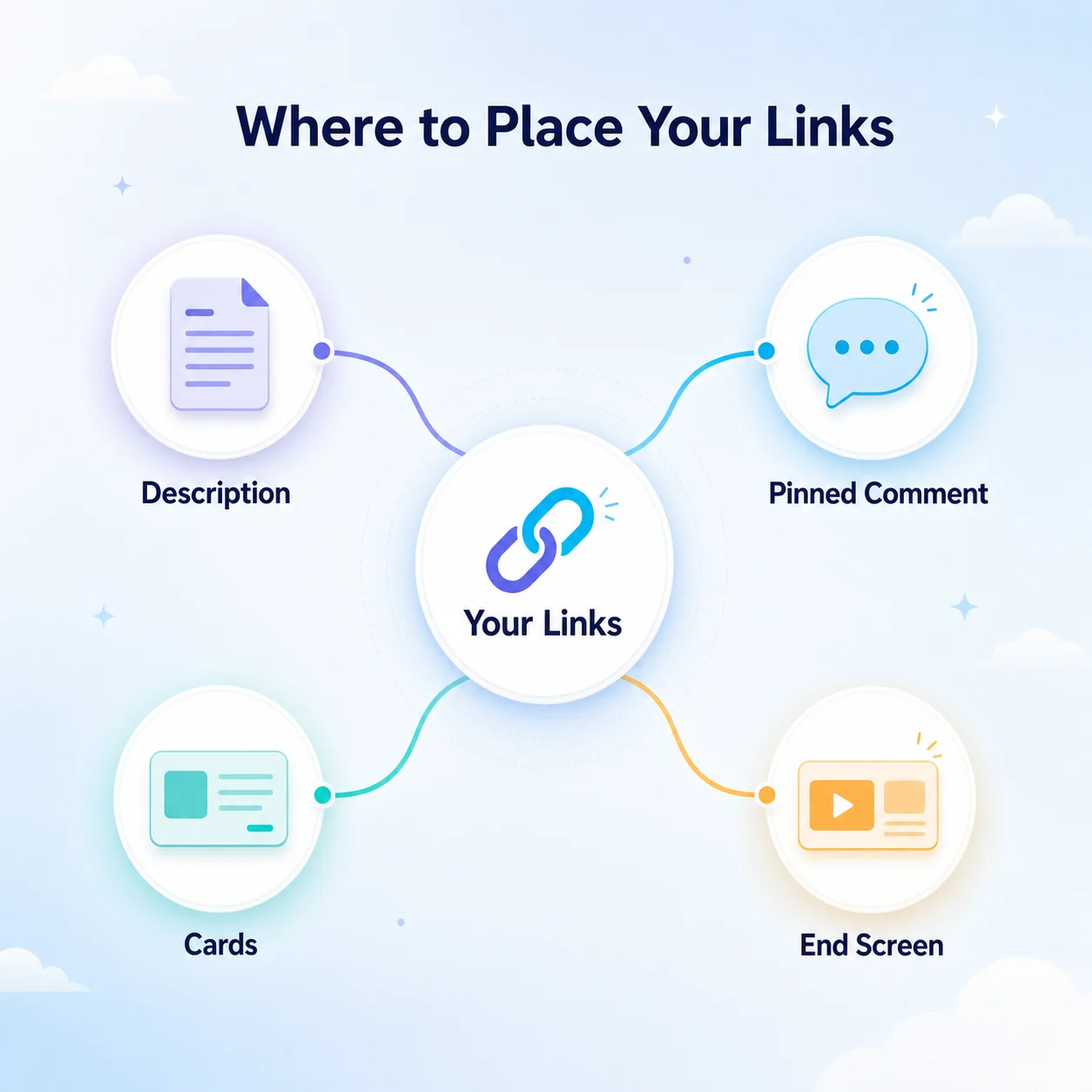
Where your links live on YouTube — the description does the heavy lifting, backed by a pinned comment, cards and end screens.
Why YouTube is one of the best platforms for affiliate marketing
Most platforms make you fight for attention. YouTube hands you an audience that is already leaning in — searching "best X," "how to Y," "is Z worth it" — the exact moments a buying decision is being made. Four things make it uniquely good for affiliates:
It's a search engine. People actively search YouTube for product research and how-tos, so your videos reach viewers with real intent, not idle scrollers.
Video demonstrates. Showing a product working — the setup, the result, the honest downsides — builds conviction that text can't match. Seeing is believing, and believing converts.
It compounds. A good video keeps ranking, recommending and earning for years, long after you hit publish. Like a blog post, it's an appreciating asset.
It builds trust fast. Your voice, your face (optional), your genuine reactions — video creates a parasocial trust that makes your recommendations land.
Add that it's completely free to start, and YouTube becomes one of the highest-leverage places a new affiliate can build.
Affground's take: the mistake new YouTubers make is chasing views; the affiliates who earn chase intent. A viral prank video with a million views earns less than a "best budget microphone" review with ten thousand — because the reviewer's audience arrived ready to buy. On YouTube, a small channel serving high-intent searches out-earns a big channel serving idle entertainment, every time. Make videos for people about to spend money.
How YouTube affiliate marketing actually works
The mechanics are refreshingly simple. You join affiliate programs, get tracked links, and place those links where viewers can click them — most importantly in your video description. When a viewer clicks and buys within the cookie window, the sale is attributed to you and you earn a commission. The video does the persuading; the link does the tracking.
Three things make it work in practice: tracked links (from the programs you join), clear placement so viewers can actually find them, and honest disclosure (both the FTC's rules and YouTube's own "paid promotion" tools). Nail those three and every video you publish becomes a small, always-on storefront.
Where to put your affiliate links
YouTube gives you several places to drop links, and using all of them lifts your click-through. In rough order of importance:
The description — the workhorse. Put your key links near the top (above the "show more" fold) with a short label so viewers know what each one is.
The pinned comment — a second, highly visible home for your main link; many viewers look there first.
Cards — clickable prompts that pop up during the video at the relevant moment.
End screens — the final call to action as the video ends.
The community tab — for channels that have it, another place to share links and offers.
Mention verbally that "links are in the description" — viewers won't hunt for what they don't know is there. The description does most of the work, but the pinned comment and an on-screen reminder meaningfully raise clicks.
Disclosure on YouTube (do this right)
Because affiliate links pay you, you must disclose them — and on YouTube that means two things. First, the FTC expects a clear, conspicuous disclosure that a reasonable viewer will notice: say it out loud in the video ("some links below are affiliate links") and write it in the description. Second, YouTube's own tools — check the "includes paid promotion" box when required and add a disclosure so the platform's own label appears.
Done well, disclosure doesn't cost you conversions — it builds the trust that drives them. Viewers already assume creators earn from links; being upfront just proves you're honest about it.
The video types that actually convert
Affiliate income on YouTube follows a handful of high-intent formats:
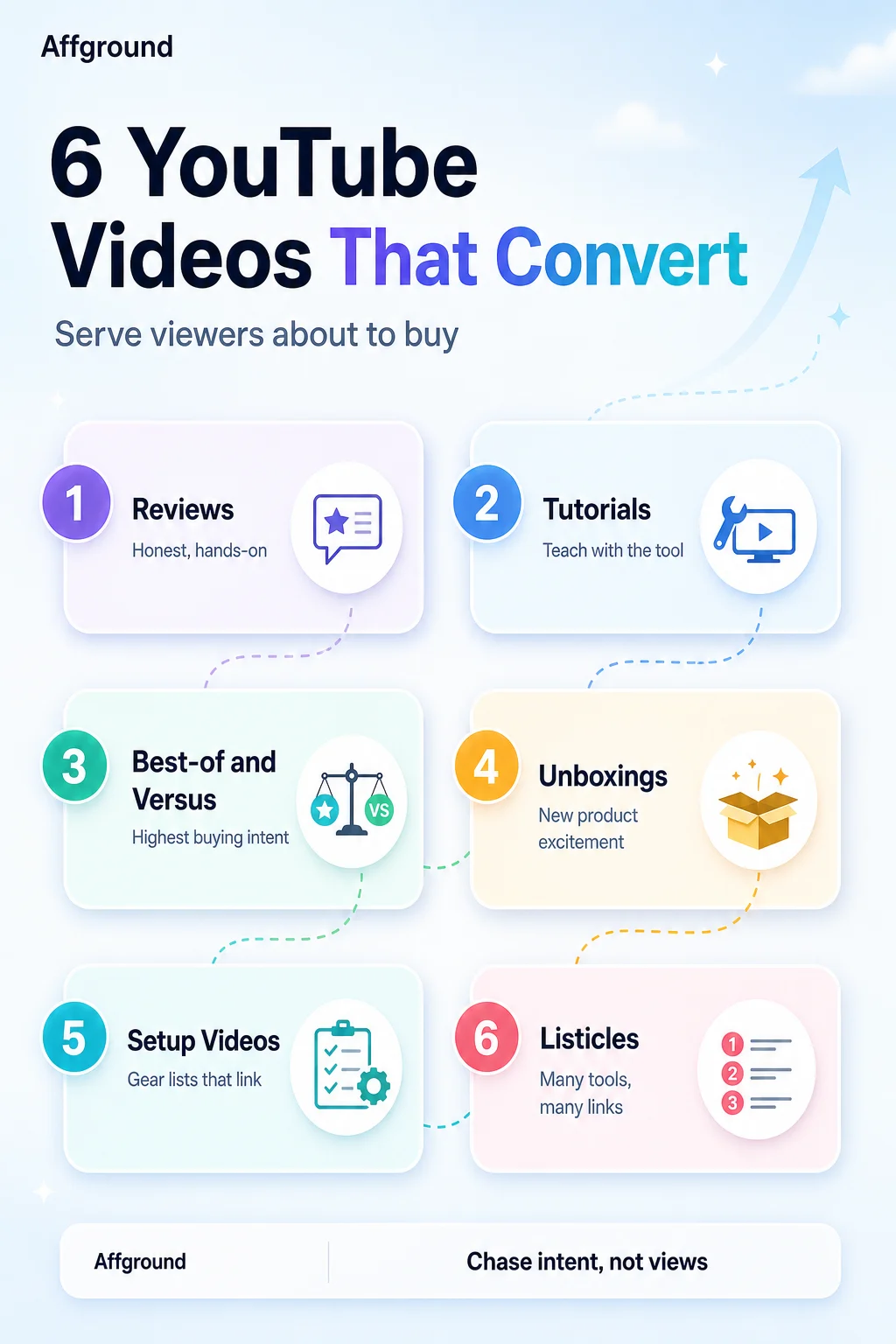
The YouTube video formats that earn — decision-stage content that reaches viewers as they choose what to buy.
Product reviews — the bedrock. Honest, hands-on, showing real pros and cons. Viewers searching a product name are close to buying.
Tutorials & how-tos — teach something using a tool, then link the tool. Extremely natural and high-converting.
"Best X" & comparisons — "best budget laptop," "X vs Y." The highest buying intent on the platform.
Unboxings & first impressions — capture the excitement of a new product and link it immediately.
Setup & recommendation videos — "my podcast gear," "my desk setup" — gear lists that beg for links.
Listicles — "5 tools every creator needs" — several products, several links, one video.
What unites them is intent. A viewer searching "best microphone under $100" is choosing which one to buy; a viewer watching a vlog is not. Point your affiliate videos at the decision, and the same subscriber count earns far more.
Affground's rule: make the video you'd want to watch before spending your own money. If it genuinely helps someone choose — honestly, specifically, showing the downsides too — it converts, ranks and earns. Thin, hype-y "review" videos that clearly never touched the product do the opposite: they burn the trust that makes YouTube affiliate work.
The best niches and programs for YouTube
Some niches are tailor-made for YouTube affiliate because they're visual, research-heavy, and high-value:
Tech & gadgets — reviews and comparisons; the classic YouTube affiliate niche.
Software & SaaS — tutorials that showcase a tool convert brilliantly, often with recurring commissions.
VPN & privacy — one of the most-promoted categories on YouTube, with generous payouts.
Online business & marketing tools — "how I built X" content that recommends the stack.
Finance, courses and creator gear — high-intent, high-value purchases.
For programs, gravitate toward ones with products you can genuinely demonstrate and that pay well per referral. These three are among the most-promoted by YouTube creators — a VPN, an SEO tool and an e-commerce platform — spanning the categories that dominate the platform:
Views are worthless if they never convert, and conversions start with getting the right viewers to watch. The levers that matter:
Search-optimise your titles and thumbnails — target what buyers actually search ("best," "review," "vs," "how to"). YouTube SEO is how high-intent viewers find you.
Hook in the first 15 seconds — retention drives the algorithm; tell viewers what they'll get and why to stay.
Deliver genuine value — honest, specific, useful content earns the trust that converts and the watch-time that ranks.
Tell viewers about the links — a simple verbal + on-screen prompt lifts click-through more than anything else.
Be consistent — a library of intent-focused videos compounds; one upload does not.
You don't need a million subscribers. A focused channel of buyer-intent videos, each with the right links, out-earns a huge entertainment channel that never sells anything.
Common mistakes on YouTube
Chasing views over intent — big view counts on low-intent videos earn little. Serve searchers about to buy.
Hiding the links — links buried below the fold with no mention get no clicks. Surface them and say they're there.
Skipping disclosure — it's legally required and, done well, builds trust rather than costing conversions.
Promoting products you haven't used — it shows on camera, and it torches credibility fast.
Only chasing the highest payout — relevance and demonstrability beat a big rate you can't authentically show.
Giving up early — YouTube (like SEO) compounds slowly; the channel that keeps publishing wins.
How to start: your first steps on YouTube
1Pick a niche you can create in — something visual and research-driven you genuinely know.
2Join a few relevant affiliate programs with products you can actually demonstrate.
3Make decision-stage videos — reviews, tutorials and "best X" for your niche.
4Place links well and disclose — description near the top, a pinned comment, an on-screen mention, and proper disclosure.
5Optimise titles and thumbnails for what buyers search, and hook hard in the first 15 seconds.
6Publish consistently and track which videos and products convert — then make more of what works.
Affground's verdict
YouTube might be the single best place a new affiliate can start: it's free, it's a search engine full of buying intent, its videos compound for years, and watching a product in action converts like nothing else. The model is simple — make genuinely useful videos, place tracked links where viewers can find them, disclose honestly, and earn when your recommendations lead to a purchase. You don't need a studio, a face, or a huge following; you need to help the right people make a decision.
So build for intent, not vanity views. Choose a niche you can demonstrate, make the review or tutorial you'd want before spending your own money, surface your links, and keep publishing. The channel that consistently helps buyers choose — honestly and specifically — becomes an appreciating asset that earns while you sleep. Affground's bet: the creators who treat YouTube as a trust-and-intent engine, not a viral-views lottery, will build the most durable affiliate income on the platform.
Frequently asked questions
How do you start affiliate marketing on YouTube?
Pick a niche you can create in (something visual and research-driven), join a few relevant affiliate programs with products you can demonstrate, and make decision-stage videos — reviews, tutorials and 'best X' comparisons. Place your tracked links near the top of the description, add a pinned comment and an on-screen mention, disclose the links honestly, optimise your titles and thumbnails for what buyers search, and publish consistently. When a viewer clicks a link and buys within the cookie window, you earn a commission.
Do you need a lot of subscribers to do affiliate marketing on YouTube?
No. Affiliate earnings track buying intent, not subscriber count, so a small channel of high-intent videos (reviews, tutorials, 'best X') often out-earns a huge entertainment channel that never sells anything. A 'best budget microphone' review with ten thousand views can earn more than a viral video with a million, because its viewers arrived ready to buy. Focus on serving searchers who are about to make a purchase.
Where do you put affiliate links on YouTube?
The video description is the workhorse — put key links near the top, above the 'show more' fold, each with a short label. Back it up with a pinned comment (many viewers look there first), cards that pop up during the video, and end screens as a final call to action; the community tab is another option for channels that have it. Crucially, mention out loud that 'links are in the description,' because viewers won't hunt for what they don't know is there.
Do you have to disclose affiliate links on YouTube?
Yes. The FTC requires a clear, conspicuous disclosure a reasonable viewer will notice — say it out loud in the video and write it in the description. YouTube also provides its own tools: check the 'includes paid promotion' box when required so the platform's disclosure label appears. Done well, disclosure doesn't reduce conversions; viewers already assume creators earn from links, so being upfront simply builds the trust that makes recommendations convert.
What are the best affiliate programs for YouTube?
Favour programs with products you can genuinely demonstrate on camera and that pay well per referral. The categories that dominate YouTube affiliate are tech and gadgets, software/SaaS (often with recurring commissions), VPN and privacy, online-business and marketing tools, and finance, courses and creator gear. Among the most-promoted programs are a VPN like NordVPN, an SEO tool like Semrush, and an e-commerce platform like Shopify — each spanning a category YouTube audiences actively research.
What types of YouTube videos convert best for affiliate marketing?
High-intent, decision-stage formats: honest hands-on product reviews, tutorials and how-tos that use a tool you then link, 'best X' and 'X vs Y' comparisons (the highest buying intent), unboxings and first impressions, setup and gear-recommendation videos, and listicles that feature several products with several links. What they share is that they reach viewers who are actively choosing what to buy, rather than idly watching.
Can you do affiliate marketing on YouTube without showing your face?
Yes — plenty of successful affiliate channels never show a face. Screen-recorded tutorials, voice-over reviews, product-focused shots, and faceless 'best of' or comparison videos all work well, because what converts is genuinely useful, honest content that helps viewers decide — not the creator's appearance. You do still need a clear voice or clear on-screen information and real value; faceless doesn't mean effortless.