Printful, Printify, Sellfy and Shopify compared: how POD commissions pay on referred sellers' orders, which cookie fits your content, and which partner to pick.
Oct 19, 2026 · 7 min read
Print-on-demand affiliate programs pay you for sending creators and small brands to the tools that print, pack and ship their merch. The audience is unusually easy to read: people searching "how to sell t-shirts online" or "Printful vs Printify" are close to opening a store, and the platforms that win those sign-ups keep earning from every order that follows. That is why the best programs in this niche pay on referred customers' order volume for months, not a one-off click.
This guide is for bloggers, YouTubers and creator educators covering ecommerce, merch and side-hustle topics. We compare the four programs that matter, explain how the commission models actually pay out, and show which audience fits which program, so you can pick one primary partner instead of scattering links across all of them.
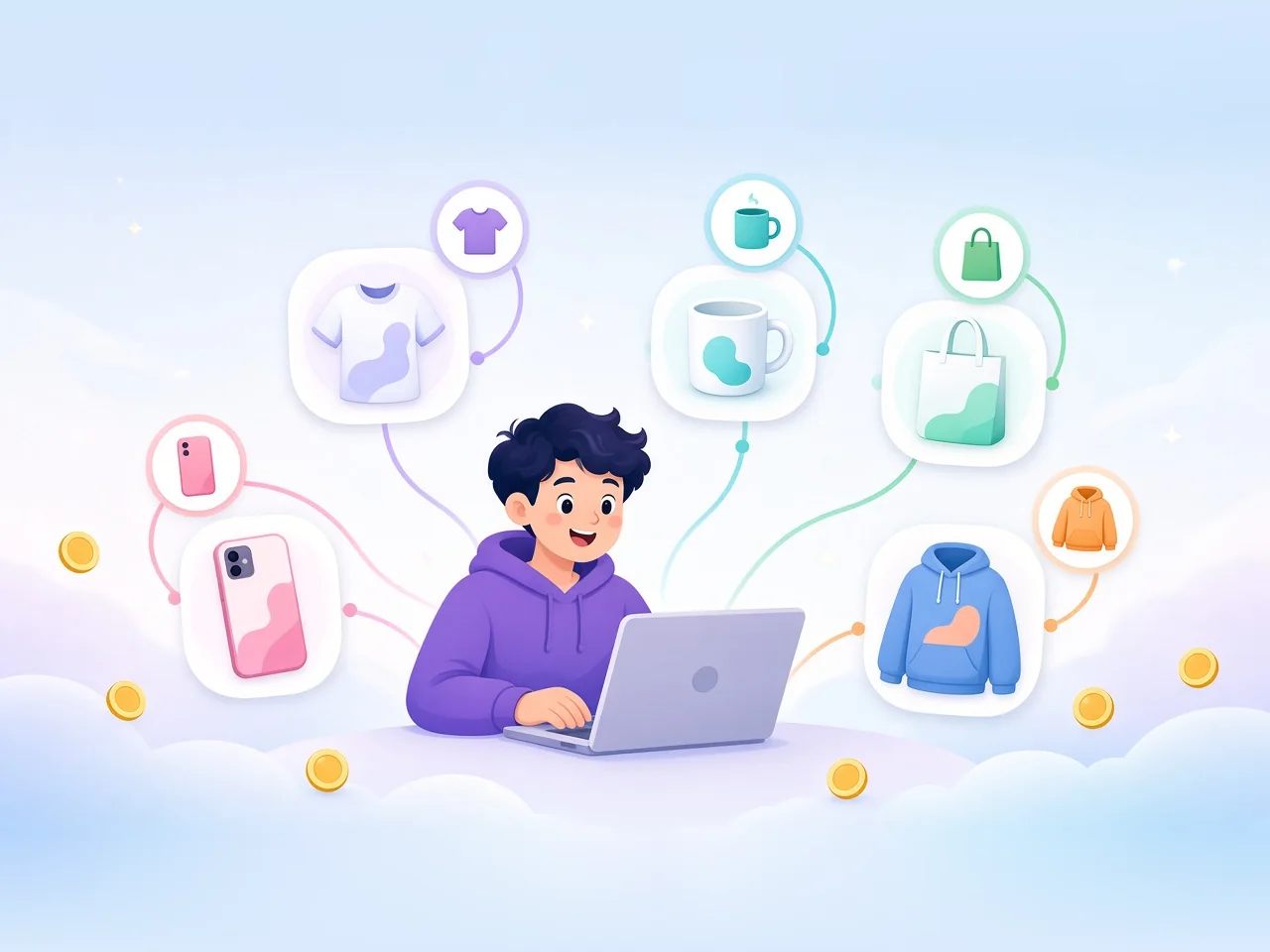
Print-on-demand programs pay on what your referred sellers go on to sell.
How print-on-demand affiliate programs pay
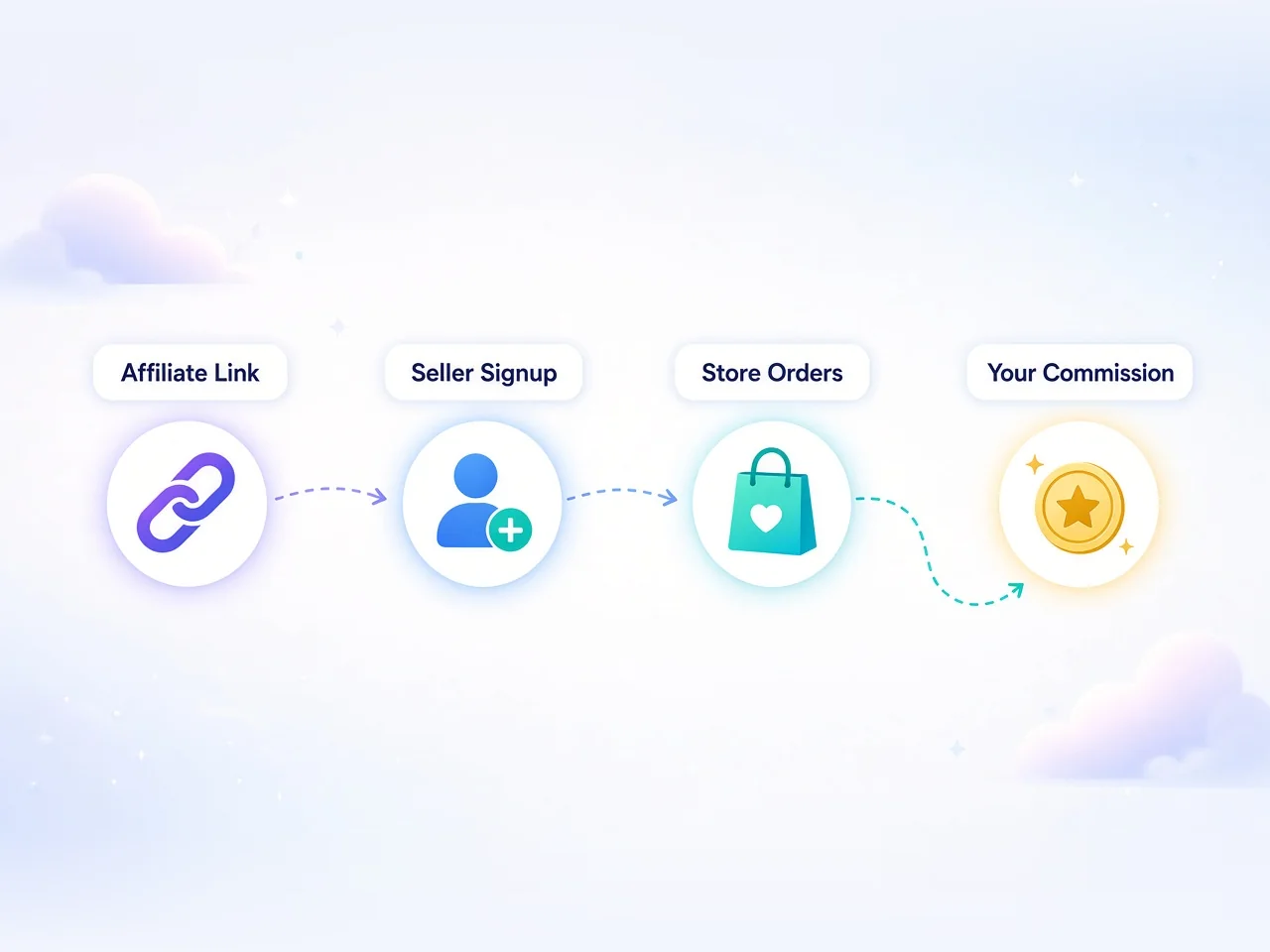
A print-on-demand (POD) platform makes money when a seller's customer buys a product. The seller pays the platform a base cost for the blank item plus printing and fulfilment, then keeps the margin they set on top. When you refer that seller, most POD programs pay you a percentage of the seller's spend with the platform for a fixed window, typically 12 months from signup.
That structure has two consequences worth understanding before you choose a partner:
Your earnings track the seller's success, not their signup. A referral who opens a store and never sells earns you nothing. A referral who builds a busy store can earn you far more than a flat bounty would.
The 12-month window is a ceiling. After a year the commission stops even if the store keeps growing, so the first months of a seller's journey matter most.
Store-builder programs work differently. They usually pay a flat bounty when the referred merchant moves onto a paid plan, or a recurring share of the subscription for as long as the customer pays. That is a cleaner, more predictable payout, but it does not grow with the seller's order volume.
Your commission sits on the seller's spend with the platform, not on the end customer's checkout.
The four programs compared
The table below uses the terms on each program's Affground listing. POD programs adjust their terms from time to time, so confirm the current details on the program's own partner page before you build a page around them.
Program
Commission model
Commission
Cookie
Payouts
Printful
% of referred customer's orders
10% for 12 months
30 days
Monthly via PayPal
Printify
% of referred customer's orders
5% for 12 months
90 days
Monthly via PayPal
Sellfy
Recurring share of subscription
25–40% tiered, lifetime
90 days
Monthly via PartnerStack
Shopify
Flat bounty per paid merchant
One-time bounty (listed at $150)
30 days
Net-30, $10 minimum
Two things stand out. Printful pays double Printify's rate but gives you a third of the cookie window, so it rewards content that converts on the first visit, such as tutorials and comparisons read by people ready to start. Printify's 90-day cookie suits top-of-funnel content where readers browse, leave and come back weeks later.
Sellfy is the outlier. It is a store platform for digital products, subscriptions and print-on-demand merch, and its program pays a lifetime recurring share, tiered by how many sales you refer each month: 25% for 1–5, 30% for 6–15, 35% for 16–40 and 40% for 41 or more. For a creator audience that sells ebooks or presets alongside merch, it can out-earn the pure POD programs over time.
Shopify is the store layer many POD sellers end up on. Its flat bounty is predictable, and it pairs naturally with a Printful or Printify recommendation because both integrate with Shopify stores.
Which program fits which audience
The right program depends less on the headline rate and more on who reads your content and what stage they are at.
Your audience
Best primary program
Why
Beginners researching their first merch store
Printify
Long cookie covers slow decision-making; low-cost catalog appeals to first-timers
Brands and established sellers focused on quality
Printful
Higher rate rewards higher-spending sellers; content about print quality and branding converts well
Creators selling digital products plus merch
Sellfy
Lifetime recurring share on an all-in-one storefront
Readers ready to build a full online store
Shopify
Flat bounty on paid plans; pairs with either POD partner
A practical pattern is one POD partner plus one store partner. A "how to start a print-on-demand business" guide can recommend Printful or Printify for fulfilment and Shopify for the storefront, with each link doing a different job. Recommending both POD platforms equally in every piece tends to split clicks and dilute your conversion data.
Use this checklist before committing your best content to one program:
01Match the cookie to your content. Comparison and tutorial pages convert fast and suit a 30-day cookie. Broad "side hustle ideas" content needs a longer window.
02Estimate the referred seller's spend, not the rate. A 10% share of a busy store beats a 5% share of a hobby store. If your readers are serious sellers, the higher rate matters more.
03Check the payout method. Printful and Printify pay via PayPal; Sellfy pays through PartnerStack. Make sure the method works in your country.
04Read the attribution rules. Percentage-of-orders programs only credit you for customers who sign up through your link, so a reader who already has an account will not count.
05Test with real content. Publish one strong comparison or tutorial, track clicks with sub-IDs, and let the numbers pick your primary partner after a few months.
Content that converts in the POD niche
POD buyers are makers. They want to see the product, understand the margin and trust that the print will look good. The content formats that consistently earn in this niche reflect that:
Head-to-head comparisons such as Printful vs Printify on product quality, shipping times and base costs.
Step-by-step store setup tutorials that walk through connecting a POD app to a storefront.
Margin breakdowns that show base cost, retail price and profit per item, using the platform's own published pricing.
Sample order reviews with your own photos of the printed product. Real photos build more trust than mockups.
Niche merch guides for specific audiences, such as podcasters, gaming streamers or small bands.
Choosing on rate alone. The 10% vs 5% gap matters less than whether your readers ever become active sellers.
Ignoring the 12-month cap. Percentage-of-orders commissions stop after a year, so do not model lifetime earnings from them.
Linking every platform in every post. Pick a primary partner per piece and explain why. Readers trust a clear recommendation.
Promising profits. POD margins depend on the seller's pricing and marketing. Show the math, and avoid income claims.
Skipping disclosure. State the affiliate relationship clearly on every page that carries these links. Our WordPress disclosure guide shows how.
Affground's verdict
For most ecommerce and creator publishers, Printful is the strongest primary POD partner when your readers are serious about building a brand, and Printify is the better fit for beginner-heavy, slow-burn audiences thanks to its longer cookie. Add Shopify as the storefront recommendation, and consider Sellfy if your audience sells digital products alongside merch. If you want programs that keep paying beyond a year, our list of recurring commission programs is the next place to look.
Frequently asked questions
Which print-on-demand affiliate program pays the most?
On headline rate, Printful pays 10% of a referred customer's orders for 12 months versus Printify's 5%. What you actually earn depends on how much your referred sellers spend, so a busy store referred to either program can out-earn many small ones.
How long do Printful and Printify pay commissions?
Both pay a percentage of the referred customer's orders for 12 months from signup. After that the commission stops, even if the store keeps growing.
What is the cookie window for Printify vs Printful?
Printify's affiliate cookie lasts 90 days and Printful's lasts 30 days, based on their Affground listings. Check each program's partner page for current terms.
Does Sellfy pay recurring affiliate commissions?
Yes. Sellfy's program runs on PartnerStack and pays a lifetime recurring share tiered by monthly referrals: 25% for 1–5, 30% for 6–15, 35% for 16–40 and 40% for 41 or more.
Can I promote Shopify and a print-on-demand app together?
Yes, and it often works well. Printful and Printify both connect to Shopify stores, so a store-setup guide can recommend Shopify for the storefront and one POD platform for fulfilment.
Do I need my own store to join a POD affiliate program?
No. These programs accept publishers such as bloggers, YouTubers and social creators. Hands-on experience with a sample order does make your content more credible, though.
How are print-on-demand affiliate commissions paid out?
Printful and Printify pay monthly via PayPal, Sellfy pays monthly through PartnerStack, and Shopify pays on net-30 terms with a $10 minimum according to its Affground listing.