AdSense is the lowest-leverage way to earn from a blog — paid per impression, throttled by tiny RPMs, and dependent on huge traffic. This guide covers the higher-earning alternatives (affiliate, sponsorships, digital products, memberships, email, services, premium ad networks), why affiliate is usually the best replacement, and how to stack streams into real income.
Jul 26, 2026 10 min read
For most bloggers, Google AdSense is the default first move — paste the code, watch the pennies trickle in, and slowly realise you'd need hundreds of thousands of monthly visitors to make real money. AdSense isn't a scam; it's just the lowest-leverage way to monetize a blog. It pays for , clutters your design, slows your pages, and hands you almost no control — and the RPM (revenue per thousand views) is so low that it only works at enormous scale.
impressions
The good news: AdSense is one of the worst-paying options available to you, which means almost every alternative is an upgrade. Affiliate marketing, sponsorships, your own digital products, memberships, an email list, services — these earn multiples more from the same traffic, because they're paid on outcomes and relationships, not raw pageviews. You do not need a million visitors. You need better monetization.
This is the complete guide to monetizing a blog without AdSense: why display ads underpay, the highest-leverage alternatives (ranked), why affiliate marketing is usually the best replacement, and how to stack several streams into real income. Written for bloggers who are done trading their traffic for pennies.
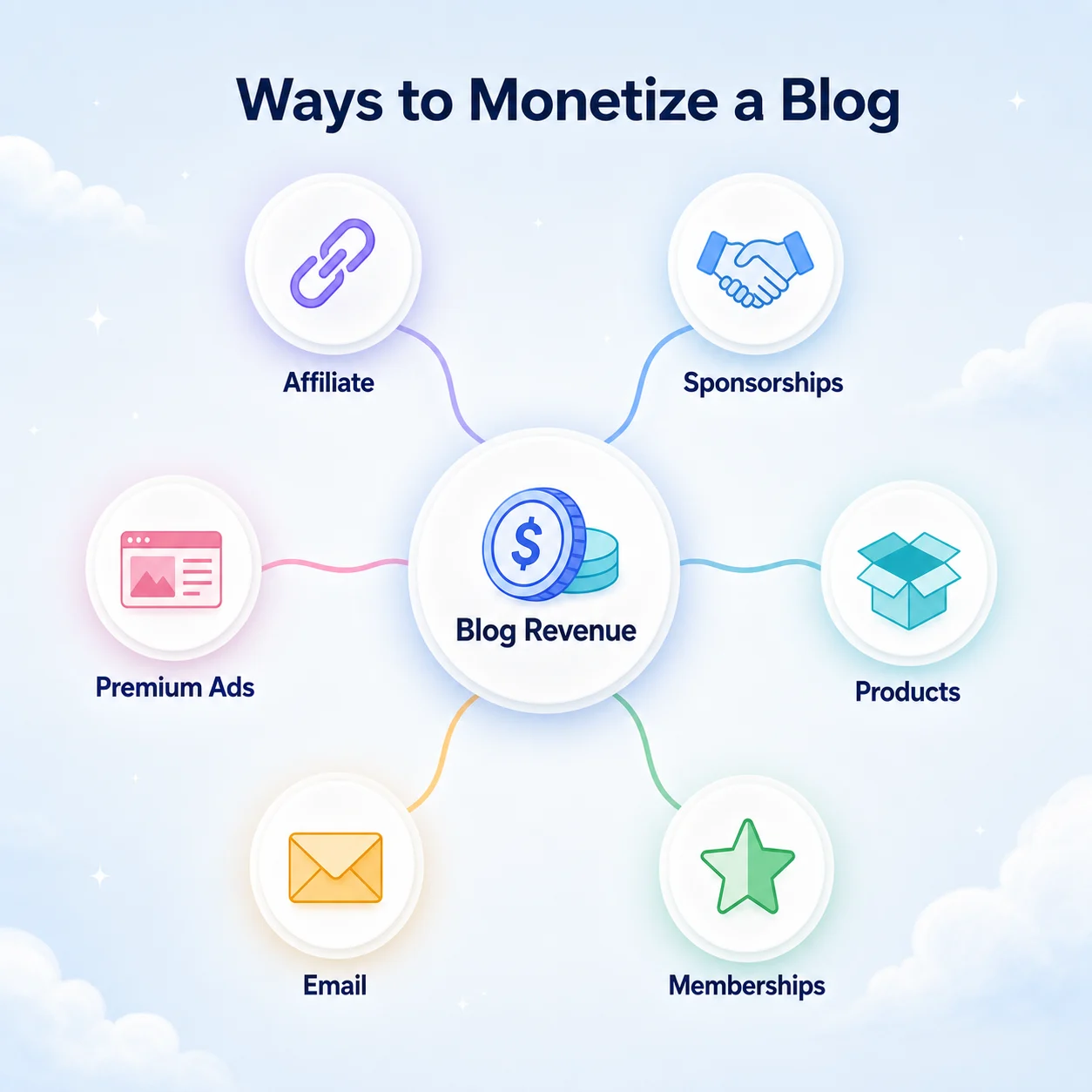
Blog revenue comes from many streams — affiliate, sponsorships, products, memberships, email and premium ads — not just display pennies.
Why AdSense underpays
AdSense is display advertising, and display is the least valuable thing your blog produces. Understanding why it pays so little is the key to replacing it:
It's paid per impression, not per result. You earn a sliver of a cent per view whether or not the reader does anything. Value flows to the advertiser; you get the scraps.
The RPM is tiny. Revenue per thousand views on AdSense is often just a few dollars — so it only produces meaningful income at huge traffic volumes most blogs never reach.
It clutters and slows your site. Ad units hurt design, user experience and page speed — and the slower, messier experience quietly costs you the trust that better monetization depends on.
You have almost no control. You can't choose the advertisers, the rates, or much of the placement. You're a price-taker on the lowest-value ad inventory there is.
Affground's take: AdSense trains bloggers to think monetization means "get more traffic." It doesn't — it means "earn more per visitor." A blog with 10,000 engaged readers and affiliate content can out-earn a blog with 200,000 pageviews running display ads, because it captures the value of its audience instead of renting out their eyeballs for pennies. Stop optimising for impressions; start optimising for income per reader. (We break down the two models in ad network vs affiliate network.)
The best ways to monetize a blog without AdSense
Here are the highest-leverage alternatives, roughly ranked by ceiling and accessibility:
1. Affiliate marketing — the best all-round replacement
Recommend products you genuinely rate, earn a commission when readers buy. It's the natural fit for a blog because you're already influencing purchases — affiliate just pays you for it. Crucially, it's paid on outcomes: one converted buyer is worth thousands of ad impressions, so affiliate typically earns many times more per visitor than display on the same content. No inventory, no product to build, and it compounds as your content ranks. For most bloggers, this is the single best AdSense replacement. (New to it? See what affiliate marketing is and how to start with no money.)
2. Sponsored content & brand deals
Brands pay you directly to feature them — a sponsored post, review, or mention. Rates are set by your audience's value, not an ad auction, so a niche blog with an engaged readership can command far more than its pageviews would earn in display. The catch: it trades time for money and caps out, so it works best alongside affiliate rather than instead of it.
3. Your own digital products
Ebooks, courses, templates, presets, printables — sell something you make once and sell forever. This is the highest-margin option (you keep nearly everything) and turns your expertise directly into revenue. It takes more upfront work, but a single good product can out-earn years of display ads, and your blog becomes the funnel that sells it.
4. Memberships & subscriptions
Charge your most engaged readers for premium content, a community, or extras — via a membership platform or a paid newsletter tier. Recurring revenue that compounds, and it deepens the relationship with your best audience. Even a small percentage of readers paying monthly can dwarf display income.
5. Email list monetization
The audience you own. An email list lets you promote affiliate offers, your products, and sponsorships directly to people who chose to hear from you — and it converts far better than any on-page ad. Email isn't a monetization method so much as a multiplier on all the others; building one is the highest-leverage move a blogger can make.
6. Services, consulting & freelancing
Your blog is proof of expertise — the best lead magnet there is for selling your own services (consulting, freelancing, done-for-you work). High-value, immediate income, and your content does the client acquisition for you. It trades time for money, but at rates display ads can't touch.
7. Premium ad networks (if you still want ads)
If you do want display income, you don't need AdSense. Premium ad-management networks (the Mediavine / Raptive / Ezoic tier) pay materially higher RPMs than AdSense once you meet their traffic thresholds, by optimising and selling your inventory better. Same idea as AdSense, meaningfully better payout — a sensible ad layer underneath your higher-value streams.
How the options compare
Method
You earn from
Traffic needed
Effort
Ceiling
Affiliate
Commissions on referred sales
Modest (with intent)
Medium
High
Sponsorships
Flat brand fees
Modest–high
Medium
Medium
Digital products
Sales of what you make
Modest
High upfront
Very high
Memberships
Recurring subscriptions
Engaged core
Medium–high
High
Email
Multiplies every stream
Any (build it early)
Medium
High
Services
Your time/expertise
Low
Medium
Medium–high
Premium ads
Impressions (better RPM)
High
Low
Low–medium
AdSense
Impressions (low RPM)
Very high
Low
Low
Two things jump out. Every alternative out-earns AdSense per visitor, and the best options (affiliate, products, memberships) don't need enormous traffic — they need an audience that trusts you. That's the whole shift: from renting eyeballs to earning from a relationship.
Why affiliate is usually the best AdSense replacement
Of all the options, affiliate marketing is the one most bloggers should reach for first — because it slots into what a blog already does (recommend things) without requiring you to build a product, land sponsors, or gate content. The economics are simply better: display ads pay a few dollars per thousand views, while a single affiliate sale can pay more than a thousand ad impressions combined. Same traffic, a fraction of the visitors needed, far more income.
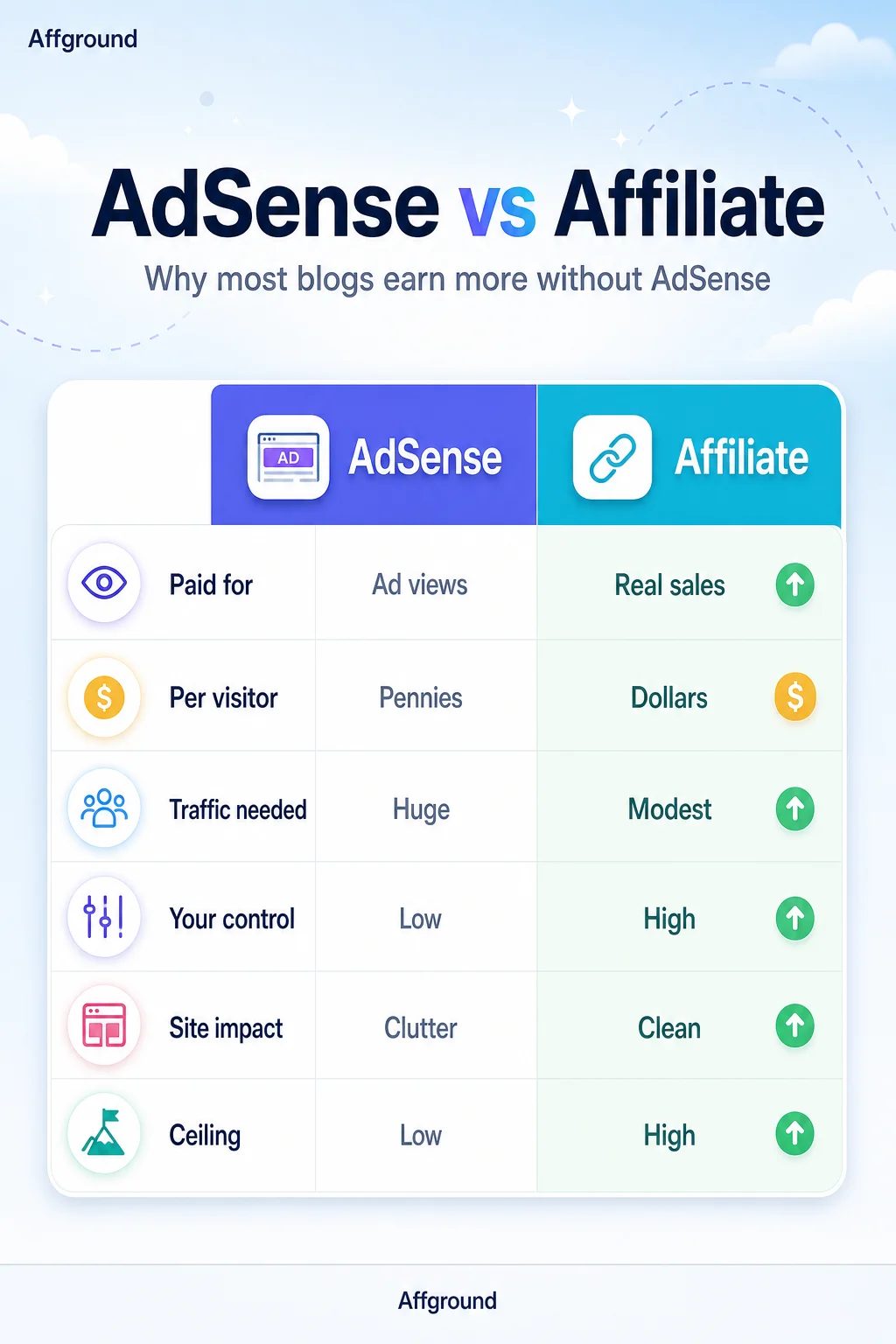
AdSense pays for views; affiliate pays for sales — which is why most blogs earn more per reader without AdSense.
It also compounds. An affiliate review or "best X" guide keeps ranking and earning for years, and unlike an ad that dies when the reader scrolls past, a good recommendation converts long after you published it. For a content site, affiliate turns your existing traffic — the exact traffic AdSense pays pennies for — into an appreciating asset.
Affground's rule: put affiliate on your money pages (reviews, comparisons, buyer's guides) and save any ads for the low-intent, informational pages where affiliate has nothing to sell. Never smother a converting page in display units — the ad pennies you gain are dwarfed by the affiliate commissions you lose. Match the monetization to the page's intent.
Where to start with affiliate monetization
The fastest on-ramp is a network that bundles thousands of programs behind one dashboard — including tools that auto-monetize the product links already in your content. These are established, blogger-friendly starting points:
Browse the full affiliate networks directory to find networks whose brands fit your niche, then match programs to your highest-intent content.
Don't pick one — stack them
The blogs that earn well rarely rely on a single stream; they layer them. A typical high-earning stack looks like: affiliate on the money pages, an email list capturing and re-monetizing readers, a digital product or membership for the most engaged, occasional sponsorships, and maybe a premium ad layer on informational pages. Each stream fills a gap the others leave, and together they earn far more than any one alone — with none of the pennies-per-view fragility of AdSense.
Start with one (affiliate is the usual first move), get it working, then add the next. Revenue stacking is how a modest blog becomes a real business.
Common mistakes
Sticking with AdSense out of habit — it's the default, not the best; almost anything out-earns it per visitor.
Chasing traffic instead of income per reader — 10k engaged readers can beat 200k passive ones.
Smothering converting pages in ads — the display pennies cost you far larger affiliate or product sales.
Ignoring email — the highest-leverage asset, and the one most bloggers build too late.
Waiting for "enough" traffic — affiliate, products and services work at modest scale; you don't need a million views.
Relying on a single stream — one algorithm change or rate cut shouldn't be able to zero your income.
How to replace AdSense: a step-by-step
1Audit your content by intent — which posts attract buyers (reviews, "best X"), which are informational.
2Add affiliate to your money pages first — join a relevant network, place tracked links where readers decide.
3Start an email list immediately — even a simple free tier; it multiplies everything later.
4Create one digital product or offer once you know what your audience wants to buy.
5Add sponsorships or a membership as your audience and authority grow.
6Layer premium ads last, only on low-intent pages, if you want a display floor — and skip AdSense for a better-paying network.
7Track revenue per stream and per page, then double down on what earns.
Affground's verdict
Monetizing a blog without AdSense isn't a downgrade — it's how blogs actually become profitable. AdSense is the lowest-value way to earn from your audience: paid per impression, throttled by tiny RPMs, and dependent on traffic volumes most sites never hit. Every serious alternative — affiliate, sponsorships, products, memberships, email, services — earns more per visitor because it captures the value of your audience instead of renting their attention for scraps.
Lead with affiliate marketing, because it fits what a blog already does and pays on outcomes rather than impressions; build an email list to multiply it; and layer products, memberships and sponsorships as you grow. Do that and you stop needing a million pageviews and start earning real money from the readers you already have. Affground's bet: the bloggers who ditch the pennies-per-view mindset for value-per-reader monetization will out-earn the ones still refreshing their AdSense dashboard, by a wide margin.
Frequently asked questions
How can I monetize my blog without AdSense?
The highest-leverage options are affiliate marketing (earn a commission when readers buy what you recommend), sponsored content and brand deals, selling your own digital products (ebooks, courses, templates), memberships or paid newsletters, monetizing an email list, offering services or consulting, and — if you still want display ads — a premium ad network that pays better than AdSense. Most successful blogs stack several of these, led by affiliate.
Why does AdSense pay so little?
AdSense is display advertising, which pays per impression rather than per result — you earn a sliver of a cent per view whether or not the reader acts. Its RPM (revenue per thousand views) is often just a few dollars, so it only generates meaningful income at very high traffic volumes most blogs never reach. It also clutters your design, slows your pages, and gives you almost no control over rates or advertisers.
What is the best way to monetize a blog?
For most bloggers, affiliate marketing is the best first move: it fits what a blog already does (recommend things), needs no product or inventory, and is paid on outcomes, so it earns many times more per visitor than display ads. From there, the strongest approach is to stack streams — affiliate on money pages, an email list to multiply everything, and digital products, memberships or sponsorships as you grow.
How much traffic do you need to monetize a blog?
Far less than AdSense implies. Display ads need huge volumes to earn meaningfully, but affiliate marketing, digital products, memberships and services work at modest traffic because they capture the value of an engaged audience rather than raw pageviews. A blog with a few thousand trusting readers and buyer-intent content can out-earn one with hundreds of thousands of passive visitors running ads.
Is affiliate marketing better than AdSense?
For most content blogs, yes. AdSense pays a few dollars per thousand views regardless of what readers do; a single affiliate sale can pay more than a thousand ad impressions combined, so affiliate earns far more from the same traffic and needs a fraction of the visitors. Affiliate also compounds — a review or 'best X' guide keeps converting for years — and it keeps your site cleaner. The ideal setup often uses affiliate on money pages and ads only on low-intent pages.
Can you make money blogging without any ads at all?
Absolutely — many blogs run zero display ads and earn more than ad-heavy sites. Affiliate commissions, your own digital products, memberships or paid newsletters, sponsored content, and services or consulting are all ad-free income streams. An email list ties them together by letting you promote offers directly to an audience you own, which converts far better than any on-page ad.
What are better alternatives to Google AdSense?
For earning per reader: affiliate marketing, digital products, memberships, sponsorships, email monetization and services all beat AdSense per visitor. If you specifically want display ads, premium ad-management networks (the Mediavine, Raptive or Ezoic tier) pay materially higher RPMs than AdSense once you meet their traffic thresholds. The best strategy usually leads with affiliate and treats any ads as a floor on low-intent pages.