AdSense or Ezoic for a small site? How the two compare on setup, payouts, page speed and optimization, plus a framework for deciding and testing.
Oct 23, 2026 · 6 min read
For most new sites, the first ad network decision comes down to two names: Google AdSense, the default entry point into display monetization since 2003, and Ezoic, the testing-driven platform that pitches itself as the step up. Both are open to small sites with no traffic minimum, so the choice isn't about whether you qualify. It's about how much control you hand over, how fast you get paid, and what you're willing to trade in page speed for potential revenue.
This comparison is for bloggers and niche-site owners who are monetizing with display ads for the first time, or who have been on AdSense a while and are wondering whether Ezoic's automation is worth the extra setup.
The short answer
AdSense is the simpler, lower-risk starting point: paste a snippet or switch on Auto ads, pass a policy review, and Google handles demand, targeting and billing. Ezoic is the more hands-on option: it runs continuous tests on ad positions, densities and layouts, and adds a header-bidding demand stack that can include Google AdX alongside your AdSense demand. Pick AdSense for simplicity and stability; pick Ezoic if you're ready to manage a more complex setup in exchange for optimization and a lower payout threshold.
How each one works
Google AdSense
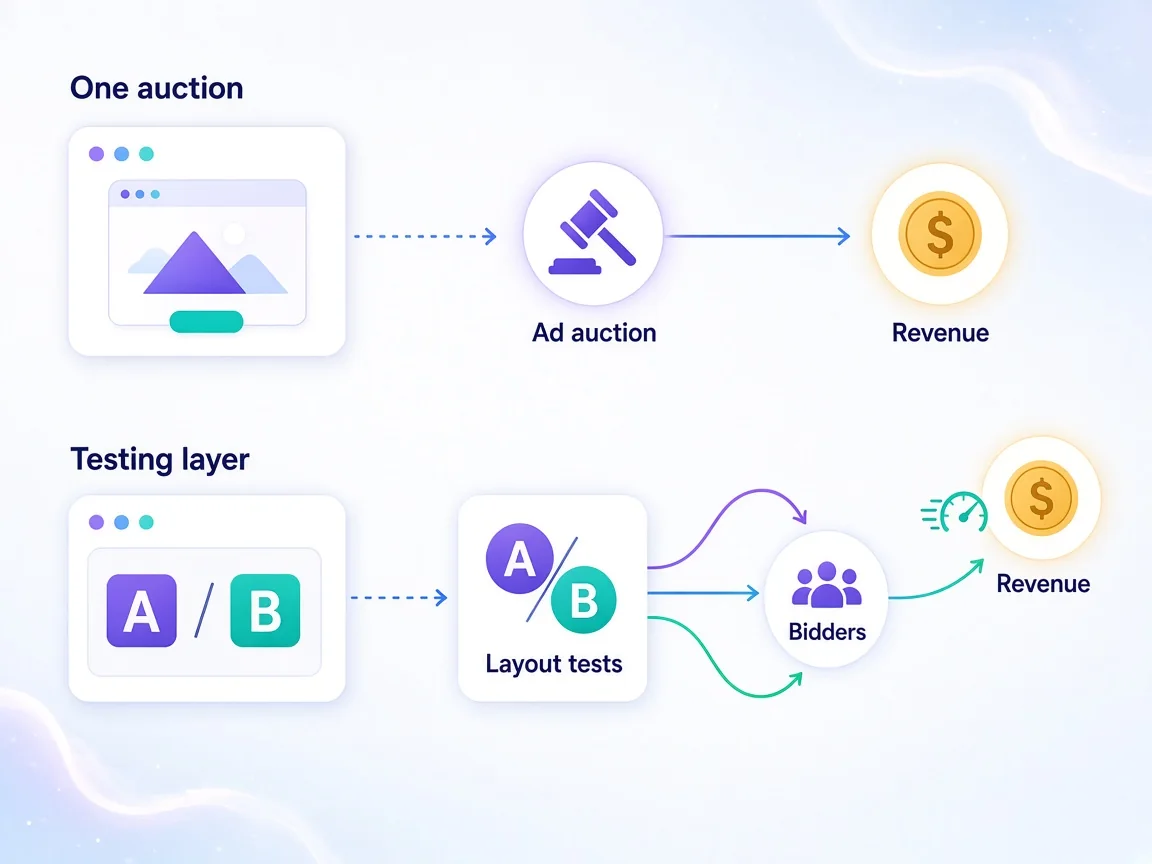
AdSense serves ads from Google Ads advertisers through a real-time auction. You place ad units manually or let Auto ads decide placement, and Google takes care of the rest. Publishers keep 68% of revenue on content ads. Formats include display, in-feed, in-article, multiplex, anchor and vignette units.
There's no pageview floor, but approval depends on a policy review of original content, site navigation and traffic quality. Once you're in, policy enforcement is largely automated, which is efficient when things go right and frustrating when they don't, because account actions are hard to appeal.
Ezoic
Ezoic sits between your site and multiple demand sources. Instead of serving a fixed set of units, it runs multivariate tests across ad positions, densities and page layouts, then keeps whichever combination earns the most per visitor while watching Core Web Vitals and bounce rate. It sells inventory through a header-bidding stack that includes Google AdX, and it can keep your AdSense demand in that auction rather than replacing it.
Ezoic also bundles a free CDN, analytics and site-speed tooling. That's useful, but it means more moving parts: a misconfigured integration can slow your pages, and earnings tend to swing during the initial testing period while the system learns.
AdSense is one auction; Ezoic tests layouts and runs several demand sources, which can include AdSense itself.
Head-to-head: the numbers that matter
Google AdSense
Ezoic
Launched
2003
2010
Traffic minimum
None (policy review)
None
Revenue model
68% publisher share on content ads
Revenue share on optimized programmatic impressions
Minimum payout
$100
$20 by default (adjustable upward)
Payment timing
Monthly, around the 21st
Net-30, around the 27th of the following month
Demand
Google Ads advertisers
Header bidding incl. Google AdX, can include AdSense
Optimization
Auto ads or manual placement
Continuous layout and placement testing
Support
No dedicated manager for ordinary publishers
Largely self-serve for smaller publishers
Here's the live comparison from our directory, which updates as listing data changes:
Notice what isn't in that table: a reliable RPM figure. Page RPM (revenue per thousand pageviews) depends on niche, audience geography, device mix, season and ad density far more than on the network's name, so any single "Ezoic earns X% more" claim should be treated with caution.
What you can reason about is the mechanism. AdSense gives you one auction with very deep advertiser demand. Ezoic adds more bidders and tests layouts aggressively, which can lift revenue per visitor, especially on sites with enough traffic for the tests to reach meaningful results. On very small sites, the testing has less data to work with, so the upside is less predictable. The honest way to know is to measure your own earnings per visitor over a few full months, not a few days.
Speed and user experience
This is the trade-off people underestimate. More bidders and more ad slots mean more scripts on the page. Ezoic explicitly optimizes against Core Web Vitals and includes speed tooling, but its own listing notes that pages can slow if the CDN is misconfigured, and that ad density can get heavy unless you cap it manually.
AdSense is lighter by default, though Auto ads can also get aggressive if you don't limit formats like anchors and vignettes. Either way, the rule is the same: set density limits deliberately. A few extra cents per visit isn't worth losing rankings or returning readers.
Getting paid
Cash flow is where Ezoic has a clear structural edge for small sites. AdSense won't release money until your balance reaches $100, which can take months on a new blog. Ezoic's default $20 minimum means smaller earners see payouts sooner, and you can raise the threshold yourself if you'd rather receive larger, less frequent payments. For a fuller picture of thresholds and net terms across the industry, see how affiliate payouts work.
A decision framework
Answer these four questions in order:
01Have you been approved by AdSense yet? If not, start there. Its review is a useful quality check, and AdSense demand can later sit inside Ezoic's stack anyway.
02Are you comfortable with DNS, CDN or plugin-level integrations? If that sounds like a burden, AdSense's snippet-and-forget setup will serve you better.
03Do you have enough traffic for testing to matter? Layout tests need volume. If you're still at a few hundred visits a day, the gain from optimization is harder to measure.
04Is page speed a ranking lever you can't afford to lose? If your site lives on organic search, plan time to audit Core Web Vitals after any switch.
Common mistakes
Judging Ezoic in the first weeks. Earnings are volatile while tests run; compare full months.
Running Auto ads with every format on. Anchors, vignettes and in-page units stack up fast.
Comparing RPM instead of earnings per visitor. More ads per page can raise RPM while hurting engagement.
Skipping a speed audit after setup. Check Core Web Vitals before and after the change.
How to test Ezoic without guessing
01Record a baseline: 30 days of AdSense earnings, sessions and Core Web Vitals.
02Set up Ezoic and keep AdSense demand in its bidding stack.
03Cap ad density and disable formats you wouldn't accept as a reader.
04Let it run for at least one or two full months before judging.
05Compare earnings per visitor, pages per session and speed scores against your baseline.
06Keep whichever setup wins on revenue and user experience.
Affground's verdict
AdSense is the right first network for almost every new site: simple, stable and backed by the deepest advertiser pool. Ezoic becomes worth testing once you have steady traffic and the patience to manage a more complex setup, and its $20 payout threshold is a genuine advantage for small earners. If you've outgrown both, our Mediavine vs Raptive comparison covers the premium managed tier, and if display ads aren't a fit at all, read how to monetize a blog without AdSense.
Frequently asked questions
Is Ezoic better than Google AdSense?
Neither is better for every site. AdSense is simpler and more stable, while Ezoic adds layout testing and more demand sources that can lift revenue per visitor on sites with steady traffic, at the cost of a more complex setup.
Can I use Ezoic and AdSense together?
Yes. Ezoic can include your AdSense demand in its bidding stack alongside other exchanges such as Google AdX, rather than replacing it.
Does Ezoic or AdSense have a traffic minimum?
Neither has a fixed pageview minimum. AdSense requires a policy review covering original content, navigation and traffic quality, and Ezoic removed its pageview requirement.
What is the minimum payout for Ezoic vs AdSense?
AdSense pays once your balance reaches $100. Ezoic's default minimum is $20 on Net-30 terms, and you can raise it yourself in payment settings.
When do Ezoic and AdSense pay?
AdSense finalizes a month's earnings early the next month and pays around the 21st. Ezoic pays Net-30, around the 27th of the following month.
Will Ezoic slow down my site?
It can if the integration or CDN is misconfigured or ad density is too high. Ezoic optimizes against Core Web Vitals, but you should audit speed before and after setup and cap ad density.
How long should I test Ezoic before deciding?
Earnings are volatile during the initial testing period, so compare at least one or two full months of earnings per visitor against an AdSense baseline.